
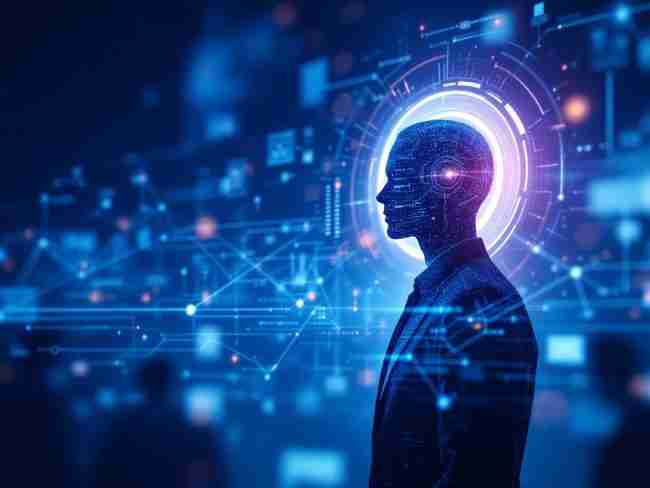
In today’s rapidly evolving business landscape, a profound shift is occurring that’s comparable to the industrial revolution – but at lightning speed. Artificial Intelligence is no longer just a fancy tool or competitive advantage; it’s becoming a fundamental part of the organizational talent stack. For business leaders, this isn’t simply about adopting new Technology – it’s about reimagining how work gets done, how teams are structured, and how value is created.
Remember when having email was a competitive advantage? When companies that adopted computers early outpaced their competition? We’re at a similar inflection point with AI, but with one critical difference: AI isn’t just automating tasks – it’s becoming a thinking partner.
Think of it like the shift from horses to cars. At first, cars seemed like faster horses. But they didn’t just change transportation – they transformed city design, commerce, and our entire way of life. Similarly, AI isn’t just making work faster; it’s fundamentally changing the nature of work itself.
Today’s most forward-thinking organizations are already treating AI as part of their talent equation. They’re asking: “What work should humans do? What work should AI do? And most importantly, what can we accomplish together that neither could do alone?”
Despite the clear signals, many business leaders remain in denial about this shift. The reasons are understandable:
Successful leadership in the age of AI requires a fundamental mindset shift. Rather than commanding and controlling a purely human workforce, leaders must become skilled orchestrators of human-AI collaboration.
This is less like being the captain of a ship giving orders, and more like being a conductor of an orchestra – bringing out the best in both human and AI “players,” understanding their relative strengths, and creating harmony between them.
The most valuable human skills are shifting dramatically. Tasks involving pattern recognition, data analysis, and even certain types of content creation can increasingly be done by AI. This doesn’t mean humans become obsolete – quite the opposite.
Smart leaders are redesigning jobs to leverage uniquely human capabilities: relationship building, ethical judgment, creative problem-solving, empathy, and cultural awareness. They’re creating hybrid teams where humans and AI each play to their strengths.
For example, customer service teams are evolving from large groups of representatives handling routine inquiries to smaller teams of highly skilled relationship managers who handle complex cases while AI handles standard questions and provides them with real-time information support.
Just as digital literacy became essential for workers at all levels, AI literacy is now becoming a core competency. This doesn’t mean everyone needs to become a programmer, but everyone should understand AI’s capabilities, limitations, and appropriate uses.
Leaders should invest in training programs that demystify AI and help employees understand how to work effectively with these new “team members.” The organizations that thrive will be those where employees see AI as an ally rather than a threat.
With AI comes new responsibilities. Who is accountable when an AI makes a mistake? How do we ensure AI systems align with organizational values and ethics? How do we maintain appropriate human oversight?
Progressive leaders are establishing clear governance structures that address these questions, creating frameworks for responsible AI use that balance Innovation with risk management.
The organizations thriving in this transition share a common trait: they’ve built cultures that embrace experimentation. They try new approaches to human-AI collaboration, learn from failures, and rapidly scale what works.
This requires leaders to model comfort with uncertainty and create psychological safety for teams to experiment without fear of failure. It means moving from annual strategic planning cycles to more agile approaches that can respond to rapidly evolving capabilities.
Perhaps most fundamentally, leaders must rethink how their organizations create value. When routine cognitive work can be automated, competitive advantage shifts to areas where humans excel: innovation, relationship building, and meaning-making.
Smart organizations are asking: What can we do now that was impossible before? How can we solve problems that were previously unsolvable? How can we create more meaningful, personalized experiences for customers?
For leaders ready to embrace this shift, here are practical first steps:
The business leaders who will thrive in this new era aren’t those with the most technical expertise or the biggest AI budgets. They’re the ones who can orchestrate effective collaboration between human talent and AI capabilities – bringing out the best in both.
Like the shift from horse-drawn carriages to automobiles, the integration of AI into the talent stack isn’t optional or reversible. It’s happening now, and it will separate tomorrow’s market leaders from those left behind.
The question isn’t whether AI will transform your organization – it’s whether you’ll be the one leading that transformation, or struggling to catch up after others have shown the way.
The post AI as the New Talent Stack: How Business Leaders Must Adapt appeared first on Business Advisor and Executive Coach | Doug Thorpe.