

Wednesday - June 24th, 2026
Apple News
×

What can we help you find?

Open Menu

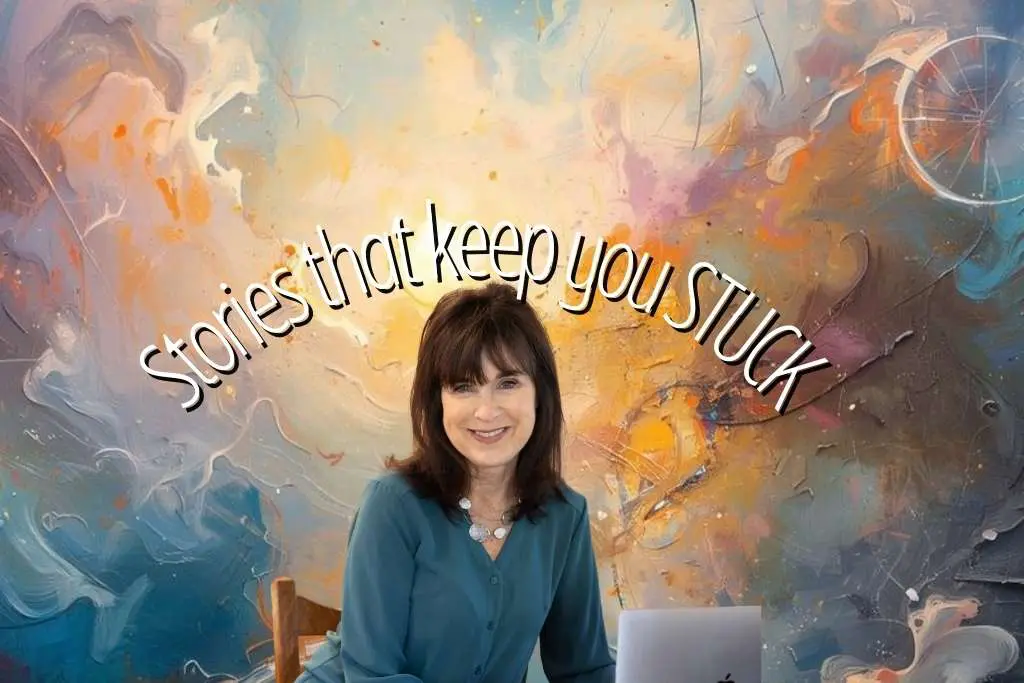
Stories that Keep You Stuck

Stories That Keep You Stuck-Deborah Johnson

We all tell stories. They play in the background of our minds like a private audiobook—shaping how we see ourselves, what we attempt, and what we avoid. These stories can be empowering, but they can also become the reason we stay stuck. Growing up I spent hours reading fairy tales. I loved checking out different books from the library and was preoccupied most of the summer. But I knew those tales weren’t truths.

When I talk with mid-career professionals, entrepreneurs, or individuals at halftime in life, I hear the same stories again and again: “I’m too old to start over,” “I’m not ready yet,” “I’m not as good as everyone else,” or “What if I fail?”  Those stories that begin quietly, gain momentum, and eventually build walls around our potential. They’re like fairy tales. And the longer we repeat them, the more convincing they sound. If you’ve ever felt stuck, stalled, or unable to move forward on something you say you want, chances are the story you’re telling yourself is the real obstacle—not your age, not your resources, and not your circumstances.

This article explores the three biggest narratives that keep people from moving forward: a fixed mindset, imposter syndrome, and the paralysis of inaction. We’ll walk through three powerful actions that can break these mental loops and help you get unstuck—starting today.

Section One: The Stories that Keep You Stuck

We all hold internal narratives formed by past experiences, fear, comparison, or misunderstanding of our abilities. These stories try to protect us, but they often end up holding us back. Let’s look at the three most common versions.
The Story of a Fixed Mindset 
Joni Eric Tada is a quadriplegic. She started down that road after having a serious diving accident at 17. Rather than surrender to despair, she embraced a mindset of resilience and purpose. During her long rehabilitation, she learned to paint using a brush clenched between her teeth — and later taught herself to write using voice-recognition software. Over the decades, she has authored more than 40 books, sung on record, and founded the global ministry Joni and Friends, which serves people with disabilities worldwide.
Joni exemplified a Growth mindset, which is opposite from a fixed mindset, which tells you that your talent, intelligence, creativity, and potential are set in stone. You either “have it” or you don’t. This story whispers, “Why try something new if you’re not naturally gifted at it?” or “It’s too late to develop new skills.”
A fixed mindset shows up when you avoid challenges, take fewer risks, or feel threatened by other people’s success. It convinces you that growth is for someone else—someone younger, smarter, more confident, or more qualified. For Joni, a fixed mindset would have kept her depressed and paralyzed mentally as well as physically. If you’ve ever said, “I’m just not that kind of person,” you’ve experienced this narrative.
But here’s the truth: nothing about your brain, creativity, or capability is fixed. Neuroplasticity proves it. Experience proves it. Real-life transformation proves it. A fixed mindset is just a story—but it can feel like a cage unless you name it and challenge it.
The Story of Imposter Syndrome  Imposter syndrome is the narrative that says you’re a fraud, even when evidence says otherwise. It tells you, “You don’t belong here,” or “You’re not qualified enough,” or “Everyone else is ahead of you.”
Emma Watson charmed us by playing JK Rowling’s Harry Potter character Hermoine Granger but has openly shared her feelings of being a fraud. Even as she’s grown older and taken on more public roles those feelings haven’t disappeared. For Watson, imposter syndrome doesn’t stem from a lack of success — it comes from deep self-doubt at being “good enough,” even when the world seems to think she is.
This imposter syndrome story especially haunts mid-career professionals transitioning to something new. After years of expertise, imposter syndrome can still convince you that you’re starting from zero—and that someone will eventually “find out” you’re not as capable as they think.
The irony? The people who feel imposter syndrome most strongly are usually the most competent. The story doesn’t attack the unqualified—it attacks the high achievers who hold themselves to a higher standard. This has also affected Sheryl Sandberg, former COO of Facebook and author of Lean In. Even though she could easily be seen as a figure of confidence and authority, she had an inner voice that said “Every time I didn’t embarrass myself or even excelled I believed I had fooled everyone yet again.”
Left unchecked, this narrative stops you from applying for opportunities, raising your prices, launching a program, trying a new tool (like AI), or stepping into the next chapter you feel called to pursue.
The Story of Inaction  I see this next story quite a bit and it’s the most damaging story and often the quietest one: the story of inaction. This story tells you that you’ll start later—when things calm down, when the timing is better, when you have more Clarity, when the kids are older, when the Economy improves, or when you feel more confident.
  • But later can stretch into years. 
  • Later becomes a habit.
  • Later becomes the place where dreams go to Sleep
Inaction shows up in Travel too—waiting until “Retirement” or better finances to finally go. I’ve known people who delayed their travel dreams for years, only to face major Health issues that suddenly made those plans impossible. It reminded me how important it is to redeem the time and not postpone the goals that matter most.
Inaction is rarely about laziness. It’s almost always about fear disguised as hesitation. If you look at any goal you haven’t moved on—writing a book, starting a business, updating your website, launching a course, or preparing your next chapter—there is almost always a “story” underneath the stillness.

Section Two: The Cost of These Stories

These mental narratives do more than keep you stuck. They shrink your future. They limit possibility. They create unnecessary suffering. And they mask themselves so well that you begin to believe they’re true.
These stories also drain your energy. Thinking about a goal without acting on it creates internal friction. You feel the tension of desire mixed with frustration, expectation mixed with guilt. This emotional weight can be heavier than the work itself.
But there’s good news. Stories can be rewritten. New narratives can be practiced. Momentum can be rebuilt at any age and any stage—especially at halftime.

Section Three: Three Powerful Actions to Get Unstuck

Here are three transformative actions that help you move beyond fixed mindsets, imposter syndrome, and inaction.

ACTION ONE: Speak the New Story Out Loud 

Awareness is the first breakthrough. You can’t change a story you haven’t identified. Name the narrative that has held you back and replace it with a new one—out loud.

Examples: 

  • Old story: “I’m not good with Technology.” 
  • New story: “I can learn with guidance, one step at a time.”
  • Old story: “I’m too old to start something new.” 
  • New story: “My experience is my biggest advantage.”
  • Old story: “I don’t know enough yet.” 
  • New story: “I know enough to begin—and beginning teaches me more.”

Speaking new sentences signals your brain to shift out of fear and into possibility. It’s simple, but it’s powerful.

Power Of After Gpt Consulting-Deborah Johnson

ACTION TWO: Take One Imperfect Step in the Next 48 Hours 

Many of us want everything to be perfect, thus holding back until perfection is attained. If I waited for perfection in finishing many of my projects, I would produce very little. There comes a point when you have to take the risk and let things go. Inaction dissolves when you take a single, small step quickly. Not next month. Not when the inspiration hits. Not when you “feel ready.” In the next 48 hours.

Examples: 

  • Send the email. 
  • Write the first paragraph. 
  • Create the outline. 
  • Upload the photo. 
  • Schedule the call. 
  • Record the 2-minute video. 
  • Draft the landing page.

Small actions unlock clarity. Clarity creates momentum. Momentum builds confidence. And confidence rewrites the story.

ACTION THREE: Surround Yourself with Story-Shifters 

We rarely outgrow limiting stories alone. You need people who challenge your assumptions, who expand your thinking, and who remind you what’s possible. These are the mentors, coaches, friends, and communities that create mirrors—not magnifying glasses.

A strong support network helps you: 

  • Interrupt negative narratives 
  • Stay accountable to your goals 
  • Celebrate progress 
  • Build resilience 
  • Step into your next chapter with courage

If you want to move forward, intentionally seek out people who speak possibility into your life—and limit time with those who reinforce old stories. There are times I will meet a colleague to just hang out for awhile and we talk “shop.” It’s refreshing, inspiring and motivating. I also am inspired when interviewing many of my podcast guests with their stories. Stories are everywhere. Just look for them.

Conclusion: You Aren’t Stuck–the Story Is

Where you are today is not your final chapter. The stories that keep you stuck are simply old narratives that have overstayed their welcome. You can rewrite them. You can redirect your future. And you can step into your next chapter with strength, strategy, and purpose.

Your best work, your greatest impact, your most meaningful contributions—they are not behind you. They are ahead of you. And they begin the moment you decide to take action, shift your mindset, and tell a new story about who you are and what’s possible next.

TAKEAWAY:

  • Speak your new story out loud
  • Take one imperfect step
  • Surround yourself with story-shifters

Our stories can be empowering, but they can also become the reason we stay stuck.

deborah johnson

Thought Leader, Keynote Speaker, Author

If you are interested in growing and learning, check out our Online Courses here: Online Learning

1,601 words

The post Stories that Keep You Stuck appeared first on Deborah Johnson.

Originally Published on https://goalsforyourlife.com/

Up for multiple GRAMMY Awards and spending over 20 years in the entertainment industry, Deborah Johnson, M.A., built multiple self-driven businesses. While many discuss career transitions and achieving success in a second act, few offer comprehensive guidance on leveraging automated content with core values and purpose. She is an expert on how to constantly reinvent yourself in a gig-economy, working mainly with those at mid-career and halftime of life. A creative powerhouse, she has released multiple books, albums, published hundreds of songs, has a thriving podcast and has written three musicals. Deborah speaks and performs for both live and virtual events.

Posted in:
Deborah Johnson
Tagged with:
0 Comments
Oldest
Newest Most Voted