
Our sturdy whitewashed church, Center Chapel, stood on a modest hill overlooking wide sweeps of farmland; farm houses, red barns, furrowed fields and tree-lined fence rows in the distance. I first saw that landscape walking up worn stone steps with my working-class father, steadied by a painted metal railing, cool and smooth beneath the breezy shade of an aged maple. The vestibule’s creaking hardwood floors led to a simple sanctuary, plain, inelegant, unadorned, quiet.
Farmers built the Chapel in 1870 on donated land and it served generations of their families, field hands, blacksmiths, granary clerks, mechanics, teachers and trade workers, just north of “Munsee Town,” a small Indiana city that made auto parts and, in a famed sociological study published on the cusp of the Great Depression, identified this “Middletown USA” as America’s “typical” city. The heartland.
The chapel’s heartland congregation was evangelical, its members reserved, devout, faithful, good natured. The pastor worked his Sunday sermons in a well-worn suit and lived in a plainsong parsonage next door. Revival meetings in the emotionally-charged atmosphere of sin and forgiveness were directed toward following in the footsteps of Jesus. Reverence was common, irreverence uncommon. Politics completely absent. The focus was on the beneficence of living the teachings of Christ – compassion, patience, forgiveness, contributions to the commonweal. Those were not considered conservative or liberal values, but human values.
I grew up in that church, sang in its choir, was devout in prayer and song, and weekly shouldered heavy choir robes handed down for years, patched, preserved and slightly musty on Sunday mornings. By the time I discovered the world beyond all that was encapsulated in the straight and narrow, I was somewhere north of a driver’s license. Curiosity led me to stray into worlds lit by neon where the devil was said to lurk in the shadows. Naturally, that set me on the path to becoming a journalist.
I was thinking about Center Chapel as I watched the news coverage of the memorial service for the slain political evangelist Charlie Kirk. An appeal during that service by a pastor called on the unsaved to commit their souls to Christ and it occurred to me that the path toward Jesus described in such appeals has changed. The once-subliminal message of exclusion – the one true way, the only way, accepting Christ – has been emboldened. The lesson, I learned growing up, was that the “only way” still came with a choice, and Christian empathy for free will was foundational. But this has been undermined in recent years by the political endorsement of the doctrines of exclusion. That was brought home to me by a Family member who became a convert from quiet Christianity to the chaos of political rhetoric. She told me that there would be no Jews in heaven. They had rejected Jesus. So, she said, had Democrats.
As a young journalist, still in my teens when my bylines began to appear, my world widened quickly. It went from the evangelical sanctuary to emergency rooms, crime scenes, prison cells and human tragedies. I saw, heard, smelled, felt and reacted to raw, everyday happenings on the street. I saw poverty, discrimination, homelessness alongside selflessness, heroism, goodness and goodwill. I learned that the world was neither black nor white, that values of compassion, understanding, empathy and mercy were not tied to one world view, nor any one religion. I saw also that the opposite of those values – the hatred, anger, discrimination, cruelty, indifference – could also seize religion and turn it against itself, making a mockery of the teachings of Jesus.
Further, I learned that journalism – the truthful and reliable recording of the world’s unfolding history – could have a spiritual purpose as well, if the spiritual indeed informed the better angels who guided this country toward the Constitutional protection of equality, fairness, justice and reliance on the rule of law.
The subject of journalism has been much in the news, yet we are seldom hearing of how its fraying threads are destroying the fabric of democracy. The foundations of journalistic integrity have been crumbling for decades. The independence of American journalism has been lost not to restrictions by political administrations, but to the greed of corporate control and the cynicism that continues to put profits over the values of freedom and independence.
Censorship of reporters, of comedians, of pastors, of the news media and of the people themselves, is playing out daily on the national stage. And while those who rely on censorship for political power are not new to the game, they have become more visible by the boldness of blatant political corruption, enabled by the very people who publicly pledge allegiance to the ideals of freedom, but plan for its destruction.
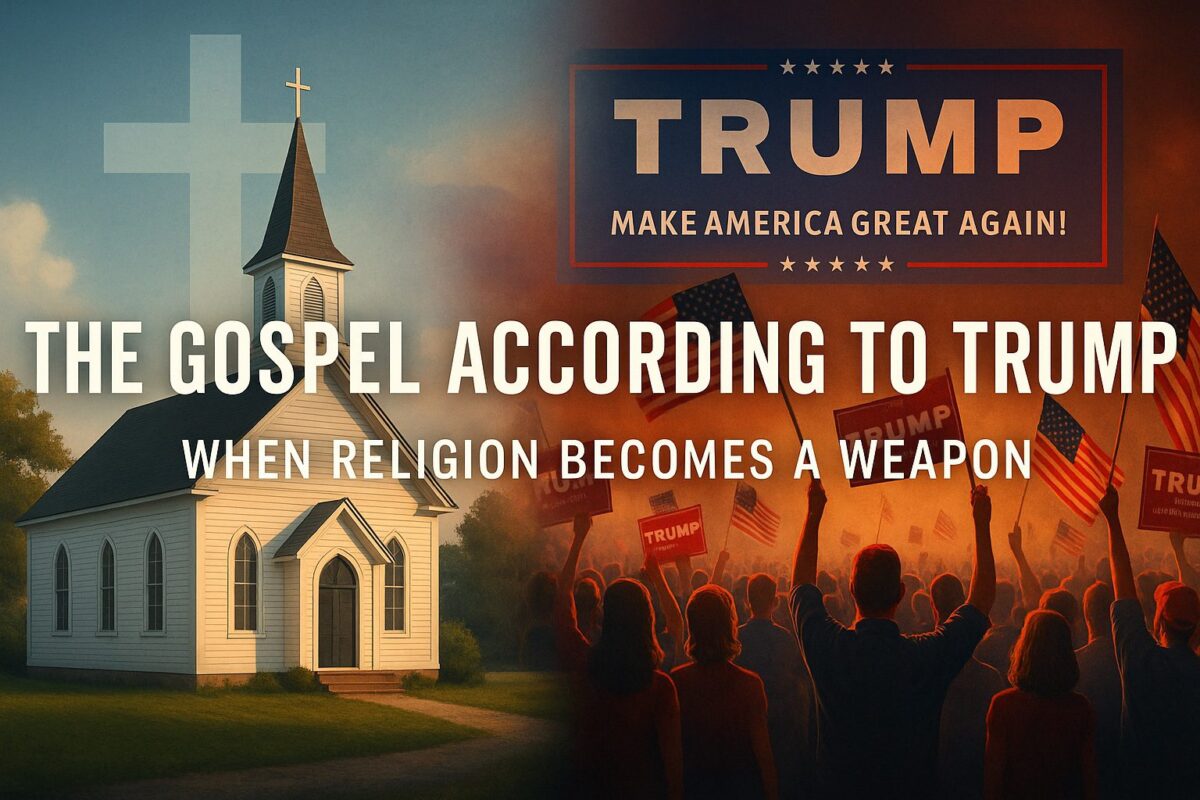
The recent restrictions on reporter-access that Trump’s Ministry of War has imposed at the Pentagon, the silencing of satirists, the bowing-down of monopolistic media to Trump’s propaganda goals, the dissolution of media from its Marriage with free speech, and the divorcement of political Christianity from the teachings of Christ, all seem to coalesce around a collusion between the American political right and ‘Christian” nationalism. It is a union long in the making, with a purposeful design. And it has seemly seen little resistance from within.The hypocrisy of Trump’s rhetoric at the Kirk memorial about hating his enemies, straddling as it was Charlie Kirk’s Widow’s pleas for a Christ-like response to chaos, brought no protest among these faithful. It does not seem to register with those who believe that protesters of Trump’s authoritarian policies are paid partisans who “hate America,” that the propaganda that sways them has a distinct and secular purpose.
Thinking about all that brought me back to the little chapel on the hill where the focus was on personal responsibility and individual choice, not on the sins of others, but our own failures, not on government or political agendas, but on what we should do for our fellow man in order to live by a Golden Rule that makes the world a better place.
As a young reporter in Middletown USA, and during the nearly five decades that followed in newsrooms across America, I saw first-hand how Democracy typically works out its problems, how it is endangered by moral corruption, how we have traditionally framed the difference between politics and religion – and how we are abandoning those ideas.
As I watched hundreds of average Americans protest this ambiguity at the recent No Kings Day rally, alongside a highway filled with horn-honkers in Astoria, Oregon, I could see among the peaceful a sign that summed up a fundamental question for those who turn to religion for political answers, and those who don’t.
The sign was a question: “Jesus or Trump?”
In that simple little Chapel of my youth, unlike the memorial for Charlie Kirk, the answer could never be both.
 Dan Luzadder is an investigative journalist and author of “The Manchurian Journalist,” which examines the media and how journalists are influenced by special interests and government agencies, including the CIA.