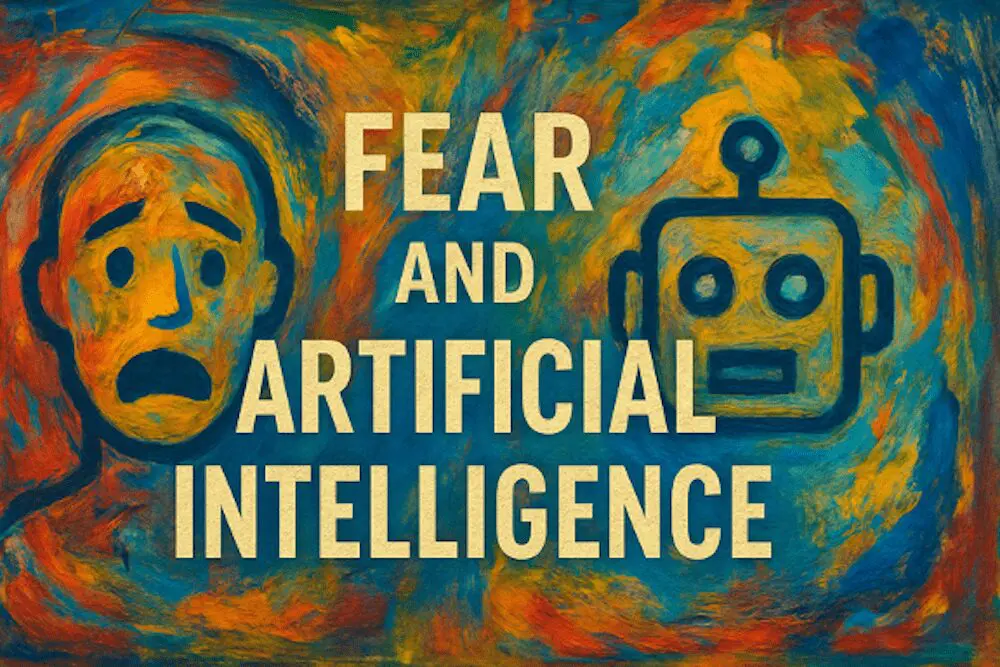
The current mania over the rise of Artificial Intelligence (AI) has actually been with use for decades. This begs the question, should we fear AI? What makes us so afraid of this technological advancement? Should we fear AI?
The answer may lie in the prevailing attitudes towards change that have always hindered our embracing what is new. The need to keep the status quo, and the fear of letting go, are at the heart of the current apprehension. People have always been afraid of change, and this case is no exception.
As the horse and buggy gave way to the automobile, so too is the rise of AI causing the same resistance. So, it’s only human nature that, as one group embraces these advances, others oppose it, either out of fear of the unknown, or the worry that some dire consequences will arise from this change.
As far back as the 1970s there have been several attempts at fearmongering as those who feared the rise of Technology. These people became known as Luddites. They rejected using computers and even cell phones as they feared it would cause them harm and even become a threat to their livelihood. Rumors of cell phones causing brain Cancer or computers run amuck and even bar codes affixed to products being the sign of the devil permeated this segment of society as they resisted any attempts at introducing technology into their everyday lives.
One such tactic was a 1970s Public Service Announcement that depicted a disembodied head being placed in a sterile environment by a mechanical figure. The commercial posed the question “By the year 2000, will automation and machines do away with our bodies?” The commercial concluded with the head calling out to C-12, apparently the designation of the automaton, as it is left to an isolated existence when his calls go unheeded.
Of course, such an occurrence never happened, but it stood out as a visualization of the fear certain people had far before the current AI mania.
Reliance on computers has long been a concern among the Luddites. Many movies had the theme of the consequences of over dependance on technology. One such movie, made in 1970, was Colossus: The Forbin Project. The movie highlighted the fear of nuclear conflict by having America’s nuclear arsenal placed under control of a supercomputer. The computer was able to link to its Soviet counterpart and together they threatened the world with nuclear annihilation if governments refused to cede control to these technological leviathans.
This fed into the exact kind of scenario the Luddites imagined.
The 1980s saw a similar storyline when The Terminator film series was introduced. The AI-created assassins were another cause for apprehension among those who feared AI. The 1984 film introduced us to a world that occurred both in the present and the future: 2004 to be exact. Like Colossus, the fictional Skynet was created to ease global tensions but ultimately resulted in world domination.
While the film series fascinated audiences for decades, it also fed into the fears of the Luddites.
As the century came to a close, the 1990s saw fact meld with fiction as the panic known as Y2K gripped the world. The fear of technology became universal as people around the globe worried that antiquated computer systems would stop functioning as the clock turned to 00. They envisioned nuclear missiles would launch as systems shut down and their automation would interpret it as an attack. People would see their savings and stock markets crash as their systems failed. The electrical grid would implode due to a lack of computer back-up. Everyday transportation would be impossible as traffic lights stopped functioning, air traffic controllers lost contact with incoming flights and marine and train Travel ceased.
And so, as we partied like it’s 1999, we also waited with apprehension as the clock ticked closer to midnight. And then…nothing. Which is exactly what happened. The predicted global calamity was nothing more than more of the same paranoia about technology that has been going on for decades.
With all of these false alarms, we have to wonder, why are the current AI fears happening? Haven’t we cried wolf enough times?
The answer lies in the past and will probably remain in the future. With voice-activated technology, smart homes, self-driving cars and even Chat GPT, we have to wonder, how much should we fear technology? Are we moving into a future where our lives become less fettered with mundane tasks? Or are we surrendering our freedom to a behemoth of Artificial Intelligence?
Only time will tell.
 Chris Waldron is a former public school educator in New York State and adjunct English professor in Conway, SC. He is co-author of Hijacked Nation, Donald Trump’s attack on America’s Greatness, published in three volumes and available on Amazon and Barnes & Noble. He is a regular contributor to Lean to the Left and all of his articles are archived here.