
It’s happened before. Every so often, American politics produces moments where citizens must feel they live in some alternative universe. But then . . .
A politician tones it down,
two opponents speak like adults,
or someone once fueled by outrage suddenly sounds . . . normal.
And we ask: Is the country finally coming to its senses?
History urges restraint. Sanity has gone and returned before. But can it survive until something breaks?
What we are experiencing these days is not unprecedented. What isunprecedented is how long it has been tolerated. In the early 1950s, Joseph McCarthy rose to prominence by weaponizing fear, accusation, and spectacle. Loyalty mattered more than truth. Silence masqueraded as prudence. Many in power knew he was dangerously reckless — but said nothing.
Eventually, McCarthy fell. Why? Not because courage suddenly spread; that’s for sure.
He fell because his excesses became undeniable, televised live, until they became politically dangerous.
Two decades later, Richard Nixon resigned in disgrace. Why? He had many defenders, much like Donald Trump does today. But the evidence of his Watergate complicity was overwhelming. It overwhelmed his defenders, and enough Republicans finally chose country over party.
In both cases, the sequence was the same:
fear → silence → rationalization → collapse.
That sequence has returned. Today, we call it Trumpism.
There’s a straight line between today’s MAGA politics and the scorched-earth partisanship of the 1990s. The Clinton years — shaped by Bill Clinton and Newt Gingrich (and his Contract with America) — normalized the idea that governing was secondary to winning.
Compromise became betrayal.
Opponents became enemies.
Power became the point.
MAGA did not invent that mindset. It perfected it. And, as a result, Donald Trump represents something uniquely dangerous.
McCarthy never controlled the presidency.
Nixon did, and he abused his power, but he still believed in institutions and the concept of America. Gingrich shattered the status quo, but operated within the rules.
Trump recognizes no such limits. He believes he is above the rules, above the law. He even persuaded the United States Supreme Court to immunize him from wrongdoing in office.
He’s repeatedly engaged in conduct that, if attempted by a Democrat, would provoke mass Republican outrage: He has weaponized federal funding, engaged in foreign adventurism, made territorial threats, and punished blue state mayors, governors, and citizens. He’s divided us between rich and poor, immigrant and citizen, red and blue, white and communities of color, Christian and minority religions, and Progressive and Conservative.
If a Democrat behaved like Trump, the Republican response would be immediate and ferocious. But the majority wimps in Congress criticize nothing. They shrug, make excuses for him, but, in large part, they remain loudly silent.
Like the Supreme Court, the congressional majority has granted the president immunity. Their failure to rein him in is beyond hypocritical. It is dangerous, and it is corroding democracy from the inside.
There are moments of civility. From time to time, individuals drift away from these divisive themes and crazy schemes. There are some momentary flickers of normal governance.
But they don’t last. Because the incentives have not changed. Our current politics still rewards:
Self-preservation over principle,
loyalty over law,
winning over governing.
Our political corrosion is not about Communism, or socialism, or even about left versus right. Donald Trump has radicalized selfishness—he has elevated personal and political gain above shared obligation and mutual sacrifice for the good of the country. He has stood Democracy on its head; not even America, Ronald Reagan’s shining city on a hill, can survive this indefinitely.
The most rational position heading into 2026 is ABT — Anyone But Trump— And this is true regardless of party. This must be a bipartisan effort. I do not suggest that Democrats are blameless or morally pure, but they are brave enough to stand up to this despot. They are willing to challenge him (once in a while) to do the right thing. So far, except for a precious few (Marjorie Taylor Greene comes to mind) who have been personally burned, Republicans behave like the Cowardly Lion in The Wizard of Oz while Trump makes himself a test case for whether any limits still exist in American politics. And there seems to be no end in sight. So long as Trump remains dominant, most right-leaning politicians will hedge rather than lead.
Sanity will continue to whisper, not rise. Sanity will not return through better rhetoric; it will only return when one branch of government (like Congress did with Nixon) enforces consequences and the rule of law.
In these past instances, America came to its senses.
Never early, never gently, but we came to our senses.
McCarthy was stopped only after he humiliated the Senate and destroyed the lives of countless innocent citizens. Nixon fell only after his criminality became undeniable. The country did not change course because it was wise — it did so because the deniers and supporters of chaos ran out of excuses.
And that is the question now.
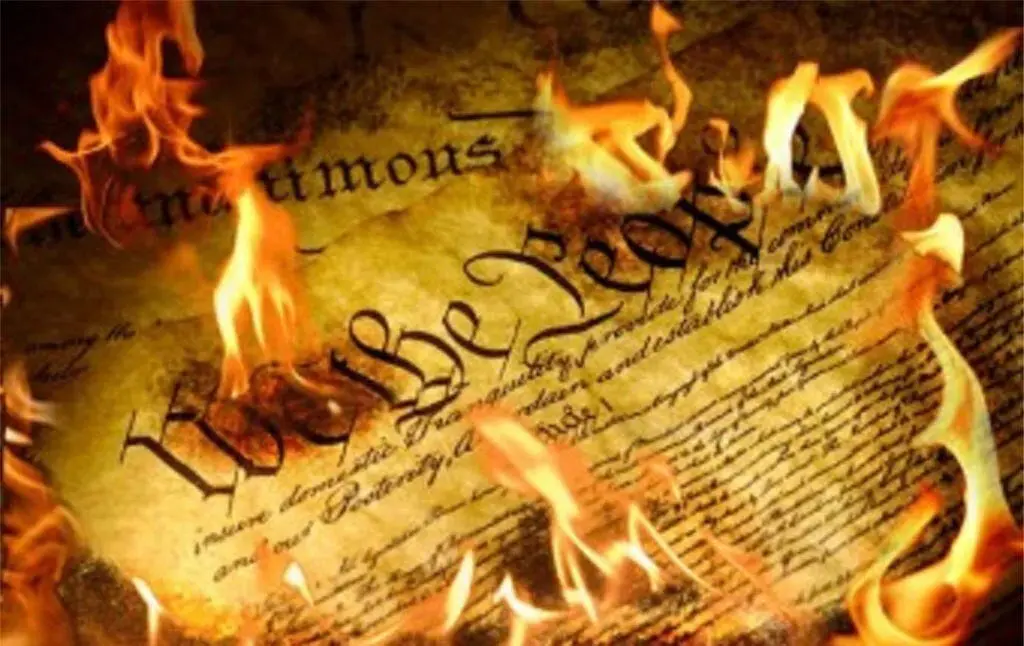
When will the damage become irreversible, or will responsible leaders step in before that happens? Norms are being shattered. Alliances are burning. The Constitution has suddenly become optional, not mandatory. Trump doesn’t even use it for guidance.
Will our leaders heed the warnings and sound alarms before or after the fire starts? How much of America must burn before we take action?
Yes, sanity has been restored in the past. But are you optimistic or pessimistic that it will be restored this time? This eternal optimist doubts our leaders and our misguided citizens are up to the challenge. I don’t know about you, but that scares the hell out of me.

Mark M. Bello is an attorney and award-winning author of the Zachary Blake Legal Thriller Series, ripped-from-the-headlines, realistic fiction that speaks truth to power and champions the rights of citizens in our justice system. These novels are dedicated to the social justice movement. They educate, spark discussion, and inspire readers to action. One of these novels, Betrayal High, was written in response to school shootings. For more information, please visit www.markmbello.com.