
Jan. 19, 2026
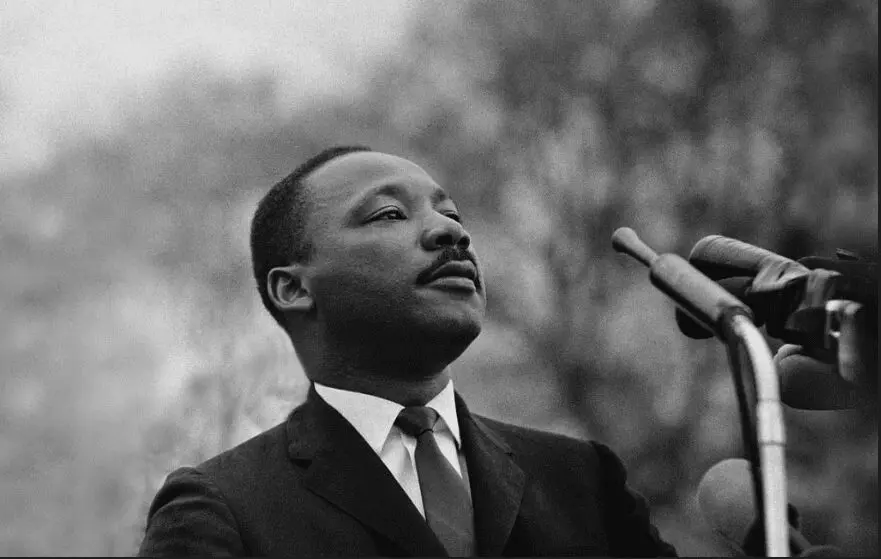
Today we honor Martin Luther King Jr.—not as a saint carved in marble, but as a living model of leadership grounded in human dignity. And this matters because dignity is precisely what our current political moment lacks.
King believed power without moral restraint was dangerous. He believed persuasion mattered more than intimidation, and that diplomacy—whether between nations or neighbors—began with recognizing the humanity of the other side. He spoke firmly, sometimes fiercely, but never cruelly. He appealed to conscience, not fear.
Contrast that with the leadership style of Donald Trump.
Trump’s approach is not rooted in dignity, diplomacy, or moral persuasion. It is rooted in debasement.
He:
Mocks the weak
Ridicules or dismisses opponents (or has them investigated)
Glorifies domination over dialogue
And frames compromise as betrayal and empathy as weakness.
Where King believed the arc of the moral universe bends toward justice—but only if people bend it—Trump believes power bends reality, facts, and people through intimidation.
King understood diplomacy as an extension of moral courage. He opposed war not because he was naïve, but because he understood what dehumanization does—to the oppressed and the oppressor. His opposition to the Vietnam War cost him allies, donors, and political capital. But he opposed it anyway—it was the right thing to do.
Trump, by contrast, treats diplomacy like a schoolyard contest. He threatens allies, praises autocrats, and confuses strength with cruelty. His worldview is transactional and tribal: Who’s winning? Who’s losing? Who’s being humiliated?
This isn’t leadership. It’s fear and showmanship.
King’s movement expanded the idea of who counts as “American.” Trump’s movement narrows it. King spoke of a “beloved community” rooted in shared humanity. Trump traffics in grievance—racial, cultural, and political—stokingresentment rather than healing it. When white supremacists show up at his rallies or march in his name, they are rarely condemned clearly or consistently. His silence speaks volumes.
King insisted that means matter as much as ends. Trump insists the ends justify any means—lying, bullying, degrading, dividing.
It’s tempting to turn Martin Luther King Jr. into a sepia-toned monument—safe, settled, and silent. But King was not a historical artifact. He was a moral actor, engaged with the injustices of his time. If he were alive today, he would not be quiet.
He would speak—clearly, carefully, and without fear—about the crises we now face.
King believed the power of the state must always be exercised with restraint, transparency, and respect for human dignity. He would not reflexively condemn protestors demanding accountability for the actions of federal officers. He warned that riots are the language of the unheard—not an endorsement of violence, but a diagnosis of injustice ignored too long.
He would insist that immigration enforcement does not excuse militarized tactics, secrecy, or dehumanization. King opposed injustice even when it was wrapped in the language of “law and order,” because he understood how often that phrase had been used to justify brutality.
King would have condemned 1-6—unequivocally. Not because he opposed protest, but because he believed profoundly in nonviolence and constitutional democracy. He marched to expand democracy, not to overturn it. An assault on the peaceful transfer of power would have struck him as a betrayal of both law and conscience. He would have rejected every attempt to excuse or minimize it and demanded accountability—not vengeance, but truth.
Many in the Jewish community struggled with King’s views on Israel and felt—sometimes bitterly—that he failed to fully grasp Jewish vulnerability. King was imperfect on this front. But he was unequivocal about one thing: terrorism is evil. The October 7 massacre—targeting civilians, families, and children—would have horrified him. He would have condemned it without qualification. At the same time, King believed that moral Clarity does not end with condemnation; it demands a commitment to human dignity on all sides. He would affirm Israel’s right to exist and to defend its people while warning that the pursuit of Security cannot come at the cost of conscience, collective punishment, or the erosion of moral restraint. For King, justice was never tribal. It was universal—or it was nothing.
King was a fierce critic of war, but not blind to aggression. He opposed militarism because it devalued human life—not because he believed victims of invasion should submit quietly to tyranny. He would recognize Ukraine’s right to self-determination while urging diplomacy that places civilian lives above nationalist pride and geopolitical ego. He would warn against glorifying violence even when the cause is just, and against confusing moral clarity with endless escalation.
Here, King’s voice would be unmistakable. He called the vote “the foundation stone for political action.” He bled for it in Selma. He understood that restricting access to the ballot was not a technical adjustment—it was a moral crime. A modern movement animated by white grievance and resentment would not impress him. He confronted that mindset in his own time and named it for what it was: a refusal to share power in a pluralistic democracy.
A Supreme Court poised to weaken the Voting Rights Act would alarm him deeply. King believed law could be a force for justice—but only if it bent toward inclusion rather than exclusion. Courts that retreat from protecting the Franchise are not neutral arbiters; they are participants in moral failure.
Again and again, King returned to a single truth: means matter as much as ends. Power without dignity corrodes. Justice without compassion hardens. Democracy without participation becomes hollow. King would not shout. He would not insult. He would not bully. He would do something far more dangerous:
He would speak to the nation’s conscience—and demand that it answer.
King would describe Trump not as fearless, but as profoundly afraid—afraid of equality, afraid of accountability, afraid of a pluralistic democracy he cannot control. In King’s moral framework, bullying is not evidence of strength but of cowardice: the impulse to dominate others as a substitute for persuasion, courage, or truth.
This Is Why MLK Day Still Matters
Martin Luther King Jr. was not perfect. But he understood something Trump never has:
Power without dignity corrodes the soul of a nation.
On this MLK Day, the contrast isn’t subtle. It’s stark. One man elevated the country by appealing to its conscience. The other seeks to dominate it by appealing to its worst instincts.
Don’t pretend that these approaches are morally equivalent. They are not, not even close.

Mark M. Bello is an attorney and award-winning author of the Zachary Blake Legal Thriller Series, ripped-from-the-headlines, realistic fiction that speaks truth to power and champions the rights of citizens in our justice system. These novels are dedicated to the social justice movement. They educate, spark discussion, and inspire readers to action. One of these novels, Betrayal High, was written in response to school shootings. For more information, please visit www.markmbello.com.