 By Bob Gatty
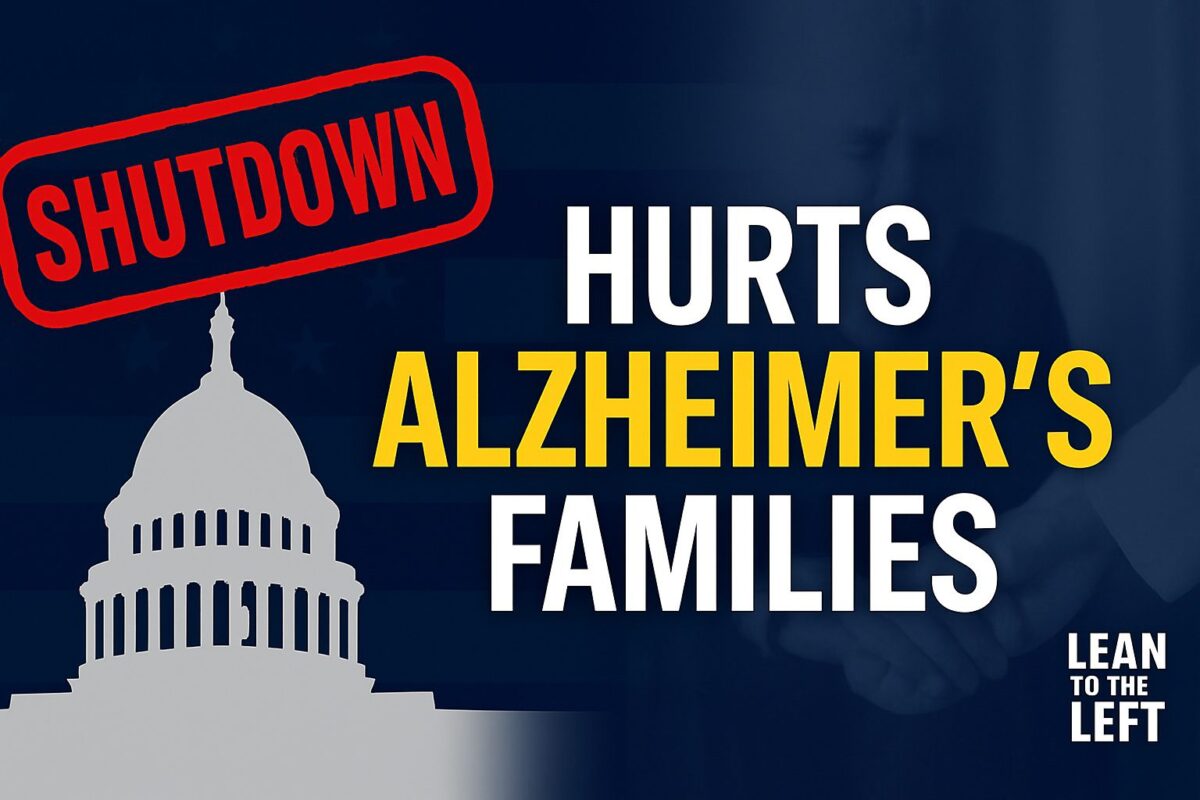
Donald Trump and the Republicans’ federal government shutdown is in danger of delaying, or even stopping, critical research that could save millions of lives of those suffering from Cancer, Alzheimer’s, and other life-threatening diseases.
Trump claims his shutdown prevents undocumented immigrants from obtaining healthcare at taxpayers’ expense. But that’s just a smokescreen since federal law esxsentially prohibits that. Medicare and Medicaid are available only to U.S. citizens and certain “qualified” noncitizens like lawful permanent residents. Undocumented immigrants are excluded, except for limited emergencies or life-threatening situations. They also are barred from buying coverage, even at full price, through HealthCare.gov or state exchanges.
But Trump never lets the truth stand in his way, and while many MAGA supporters buy that argument and parrot it on social media, they don’t’ realize the real impact could be to stop or delay the research needed to help their own Family members, or themselves, should they contract such dread diseases in the future.
From Personal Experience
Let me tell you, if for one minute they were faced with caring for a relative suffering from Alzheimer’s, they would be singing a different tune. Try listening to your loved one being confused as to where the bathroom is, or not even recognizing you. Try listening to them weep and say, “I just want to be normal again.” And you understand that will never, ever, be the case. Try being faced with trying to properly care for them alone, with little help, or in the alternative, finding a memory care facility that won’t just warehouse them, drugged up, in wheelchairs staring off into space.
Here are the facts from ChatGPT regarding how the Trump/GOP shutdown is affecting, or will affect, research into a possible cure or ways to prevent the disease:
How government funding and research normally work
- The National Institutes of Health (NIH) is the largest federal funder of health and biomedical research in the U.S. Many Alzheimer’s and cancer research projects are supported (in full or in part) by NIH grants.
- NIH grants are typically awarded via multi-year funding commitments, but with annual budgets and sometimes annual review cycles.
- The NIH (and other agencies) run processes like publishing funding opportunity announcements (FOAs), peer review of grant proposals, issuing new awards, monitoring progress, disbursing payments, and administrative oversight.
- Many research labs depend on a steady flow of funds (for salaries, supplies, equipment, etc.). Delays or uncertainties can disrupt ongoing experiments and staff support.
When the federal government is shut down (i.e., appropriations bills haven’t been passed), nonessential federal operations are suspended (or curtailed), and many employees are furloughed. Some services deemed “essential” continue, but many grant-related and research-support functions are considered nonessential and are paused.
Net Effect & Likely Outcomes for Alzheimer’s & Cancer Research
- Short-term delays and disruptions
For the duration of the shutdown, many processes essential to research progress will slow or stop. Applications won’t be reviewed, new trials won’t begin, funding disbursement may stall, and administrative oversight will be limited.
- Extended recovery and backlog
Once the government reopens, there will be an influx of tasks (reviews, payments, contract renewals) and a backlog that will slow down catch-up. That means even after the shutdown ends, progress will remain delayed for some time.
- Missed opportunities & lost momentum
Some promising research proposals may get shelved or lose momentum. Some labs may delay starting new projects or hiring new staff due to risk aversion. In fast-moving fields (like cancer immunotherapy or Alzheimer’s biomarkers), a delay can mean falling behind competitors in other countries or missing “windows” of opportunity.
- Career damage, especially to trainees
Early-career researchers (graduate students, postdocs) are more vulnerable. Funding gaps can force them to abandon projects, move to other fields or institutions, or even leave academia entirely. That weakens the pipeline of talent in Alzheimer’s and cancer research.
- Compound effect over multiple shutdowns
If shutdowns or funding lapses become frequent, the cumulative damage could be more severe — eroding trust, discouraging investment, and making long-term planning very difficult.
- Risk to patient-centric progress
Delays in clinical trials, especially those involving human subjects (e.g. Alzheimer’s treatment trials), slow the process of translating laboratory discoveries to therapies that benefit patients. This is particularly harmful in diseases where time is critical.
Although some projects with existing funding may limp along, many components of the research pipeline will be delayed or stalled, and the cumulative impact can slow scientific progress, raise costs, and threaten the careers of researchers — particularly in the most vulnerable stages.
What’s happening now — specific disruptions
NIH staffing and furloughs
- NIH plans to furlough ~75% of its personnel. Reuters
- Across the Department of Health and Human Services (HHS), about 41% of employees (≈ 32,460 people) will be furloughed, substantially impairing administrative functions: grant review, oversight, communication with grantees, compliance review, contract management, etc. Reuters+1
Delays or cancellations of research protocols and clinical trials
- The NIH’s Intramural Research Program (internal NIH labs) has, in past shutdowns, seen large-scale disruption: protocols put on hold, experiments lost, clinical protocols paused. irp.nih.gov
- In one shutdown, of seven new clinical protocols scheduled to begin, only one was allowed to proceed, based on life-threatening urgency. irp.nih.gov
- Patient visits and recruitment for ongoing studies were greatly reduced; in one case only 25 of over 400 scheduled visits were allowed during the shutdown. irp.nih.gov
- Abrupt halts to clinical trials (including cancer trials) can cause cascading problems for both investigators and patients — delays, loss of momentum, challenges re-enrolling, regulatory complications. Nature
Frozen or delayed funding & grant policy manipulations
Budget proposals and institutional risk
- The administration’s proposed NIH budget would amount to a nearly 40% cut (~$18 billion) relative to current levels, shrinking NIH’s discretionary budget to around $27.5 billion. STAT+2Reuters+2
- Under those proposals, the National Cancer Institute (NCI) — a major funder of cancer research — would be cut from ~$7.2 billion to ~$4.5 billion. STAT+1
- The proposed cuts and freeze in funding have triggered strong objections from cancer research organizations (e.g. ASCO) about their potential to derail progress. ASCO+1
Alzheimer’s-specific impacts & examples
Alzheimer’s Disease Research Centers (ADRCs) and funding delays
- Fourteen out of the 35 NIH-funded Alzheimer’s Disease Research Centers (ADRCs) face funding halts of about $65 million. Tammy Baldwin+3The Guardian+3Tammy Baldwin+3
- Because those centers have grant renewals impending, the lack of Council meetings has blocked the final step in approving continued funding. Tammy Baldwin+2Being Patient+2
- Some ADRCs warn that if funding is not restored, they may have to scale back critical functions, like brain banks, patient recruitment, data sharing infrastructure, and continuing longitudinal studies. Being Patient+1
- For example, the University of Pittsburgh’s ADRC is reported to be struggling with staff retention due to the uncertainty. The Guardian
Specific grant terminations, delays, and reversals
- NIH has terminated or withheld funding for many grants across biomedicine; among the canceled or frozen grants are those tied to Alzheimer’s or broader neuroscience research. Being Patient+4STAT+4Transmitter Neuroscience News+4
- One prominent example: A UC Davis Alzheimer’s researcher, Charles DeCarli, was ordered to stop work on a nationwide dementia study due to funding being rescinded. That grant was later restored after public pressure and appeals. Scientific American+2CalMatters+2
- Some Alzheimer’s projects were among those cut under the NIH “DEI purge” (projects with terminology or focus on diversity, equity, inclusion) that the administration claimed did not align with its priorities. CalMatters+3ACLU of Georgia+3Being Patient+3
Broader neuroscience / Alzheimer’s budget trends & cuts
- Neuroscience research has been hit hard in general: about $323 million in NIH neuroscience grants and training programs were reported as cut or rescinded. Some share of those cuts overlapped Alzheimer’s work (~20%) according to one analysis. Transmitter Neuroscience News
- The NIH’s shift to awarding full multi-year budgets upfront, rather than incremental funding, has also reduced the total number of new grants awarded. Some Alzheimer’s proposals that scored well were reportedly left unfunded. The Washington Post+4The Washington Post+4The Washington Post+4
- The administration’s proposed 40% cut to NIH for FY 2026 would significantly reduce the resources available for Alzheimer’s research (and other disease areas). STAT+3alzimpact.org+3AAMC+3
- There are attempts to cap indirect cost rates (i.e. the fees that institutions receive for infrastructure, administrative support, etc.) at 15%. This could disproportionately hurt Alzheimer’s research centers, which often rely on higher indirect cost rates to run labs, maintain core facilities, and support data infrastructure. Senate Committee on Appropriations+3Tammy Baldwin+3STAT+3
- Legal pushback: a federal judge has issued a preliminary injunction blocking the NIH’s proposed drastic cuts in medical research (including indirect cost limits) while lawsuits proceed. AP News
What this means in practice: risks & consequences for Alzheimer’s research
- Disruption of long-term studies / cohorts — Alzheimer’s research often relies on longitudinal studies, repeated neuroimaging, biomarkers, cognitive tracking over years. If funding is paused or delayed, those studies risk gaps or dropping participants, which weakens data continuity.
- Impact on brain banks & biorepositories — ADRCs maintain tissue banks, biospecimen collections, imaging repositories. Funding uncertainty could degrade maintenance, staffing, data processing, or limit sample acquisition.
- Slowing or stalling of clinical trials — Clinical trials for Alzheimer’s are expensive and long-running. Delays in funding, contract renewals, or regulatory oversight can delay those trials or limit enrollment of new participants.
- Loss of talent, brain drain — Early-career researchers, postdocs, junior faculty in Alzheimer’s research are particularly vulnerable to funding gaps. They may leave the field or accept more stable jobs in other domains.
- Reduced Innovation & fewer new proposals — Researchers may become more cautious in submitting ambitious, high-risk proposals (which sometimes are the ones that yield breakthroughs), due to uncertainty that funding will ever be awarded.
- Erosion of U.S. leadership — As U.S. Alzheimer’s funding becomes less stable or smaller, international competitors (academic institutions abroad, private funding agencies) may outpace U.S. efforts.
Trump’s actions are having serious and life-threatening consequences, and it’s all about vengeance, his hate for President Obama and his signature healthcare law, and his determination to undo anything created by Obama and President Biden. It’s tragic, and people will suffer – including his own unwitting supporters and their family members who are not immune from the devastation of Alzheimer’s and other related diseases.
So let’s be clear: Trump’s shutdown isn’t about protecting taxpayers. It’s about politics, vengeance, and power — and the price is being paid by families struggling with diseases that don’t care if you’re a Democrat or a Republican.
If you care about the truth, if you care about protecting science and saving lives, stand up against this cruel shutdown.
For many years, Bob Gatty worked as a writer, editor, and communications consultant, based on the Washington, DC area with a focus on government and politics. He began at The Pittsburgh Courier, an African American weekly, covering crime and the courts. His salary was $55 per week before moving on to two local Pennsylvania dailies. At age 24, he began reporting for United Press International covering state politics in Pennsylvania and then New Jersey, where he was UPI’s state capitol bureau in Trenton.
Tempted by the allure of Washington, DC and big-time politics, at age 29 Bob became press secretary and chief of staff for two Congressmen – first Republican Edwin B. Forsythe, and then Democrat James J. Florio, who later became governor of New Jersey and until his recent death was a frequent podcast guest and co-host of Bob’s NFN Radio News podcast (now called Lean to the Left).
After seven years on Capitol Hill, Bob opened a communications business in Washington, first providing political media consulting to candidates and then freelance Washington coverage for business and trade magazines, plus creative communications services for trade and professional associations, including social media. This work involved articles and analyses of key governmental developments affecting businesses, such as the food and Health industries, retailing, and the environment.
His work as a communications consultant to trade and professional associations included launching and editing association publications, providing website content and social media assistance, and covering conferences and conventions.
Bob retired from G-Net Strategic Communications in 2016 and moved to Myrtle Beach, SC, where he launched his blog site, first called Not Fake News, now known as Lean to the Left.
Hijacked Nation
In August, 2020, Bob and co-author Chris Waldron, one of Lean to the Left's most loyal and prolific contributor, published "Hijacked Nation-Donald Trump's Attack on America's Greatness," a two-volume compilation of blogs regarding Trump's presidency and the consequences for our nation. A followup volume was published by Luna Global Media in September 2024. It is available at https://amzn.to/4ePrTF7 .
In all three volumes, blogs from Not Fake News and Lean to the Left create a virtual play-by-play of key actions of the Trump administration and Congress. For more information, please visit https://leantotheleft.net/books/, and visit Bob's Author's Page on Amazon, https://www.amazon.com/stores/Bob-Gatty/author/B08C7HWXZ5?ref=ap_rdr&isDramIntegrated=true&shoppingPortalEnabled=true&ccs_id=4e603563-7251-4074-b54d-40800c4ce40a.
The Lean to the Left Podcast
The Lean to the Left podcast provides commentary and interviews with newsmakers and others with interesting stories to tell. Video and audio podcasts stream twice weekly on major channels. More info at https://podcast.leantotheleft.net.
The Lean to the Left YouTube Channel
You'll find all of the audio tracks for the Lean to the Left Podcast here plus original videos, including complete video versions of each podcast.
https://www.youtube.com/@LeantotheLeft.