

My brother-in-law was an English teacher before he went to the University of Virginia’s Darden School of Business for his MBA. He was hired by Cooper’s & Lybrand as a consultant. He soon went to Indonesia putting a management accounting system in the state-owned oil company.
Somehow I developed a mental image of consultants, well-dressed wisemen whispering the answer in the CEO ‘s waiting ear. Youthful fantasy!
It is a fantasy that persists for many consultants in the form of “The Trusted Advisor.” The Trusted Advisor is the title of a best-selling book by David Maister, Charles Green and Robert Galford. I frequently recommend the book to mid-career consultants. It is excellent, but I suspect that one of the reasons it sells so well is that “everybody wants to be a star.”
Deep down consultants imagine themselves like Thomas Becket advising Henry II or Robert McNamara advising JFK, despite that neither of those examples worked out well.
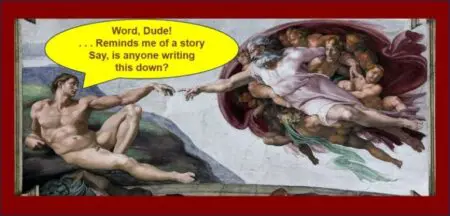
The trusted advisor role is an archetype in many cultures. Let’s look at two stories, Joseph, the advisor to Pharaoh in Genesis in the Bible, and Merlin, the magician of the King Arthur stories. Maybe these tales can teach us something about the trusted advisor role.
Disclaimer: This is a story about how God takes care of the chosen. It is a central story to both Judaism and Christianity. Apologies to the faithful for my sardonic style. I mean no disrespect.
Joseph was the youngest of twelve sons of Jacob, Israel’s patriarch. Joe was Papa Jake’s favorite and his brothers didn’t like him much. He was a spoiled tattletale, who got the “coat of many colors” and then there was the whole dreaming thing. He interpreted his dreams for them “my sheaf of wheat is rising above eleven others, my star is rising above eleven others: you all are going to bow down to me.” Sibling rivalry being what it is, the older bros sold kid-brother to a passing slaver bound for Egypt.
In Egypt, slave Joseph seemed clairvoyant about markets and his master, the merchant Potiphair, prospered. All was well until the merchant’s wife took a fancy to Joe. He demurred, she got her husband to throw Joe in the clink as revenge.
In prison, Joe used his dream gift predicting that a baker would be executed and a butler freed.
Then the Pharaoh had a nightmare and the usual viziers were stumped. Then the butler said, “funny story. . .There is this Hebrew, I met in jail. . . .”
Joseph listens to the monarch’s dream, seven lean cows devouring seven fat cows – and in case you didn’t get it – seven ears of corn devouring seven ears of corn on another stalk.”
Joseph predicts “there come seven years of great plenty. . . after them seven years of famine.” Joe recommends one of the first recorded supply chain inventory management projects and the Pharaoh puts him in charge of implementation. They save twenty percent of Egypt’s corn and grain with a well-policed warehousing strategy are sitting pretty when famine arrives.
The story continues, Joseph gets some payback from his brothers, but let’s observe a few facts:
Is he a “trusted advisor” to Pharaoh? You bet. And he is well rewarded – big fees and the reward that keeps on giving – his freedom and an all-expense-paid trip home with the Family.
Disclaimer again: The King Arthur myth is not religious per se, but it is a values story, teaching leadership and “democratic” governance in the context of a feudal society. First mentioned in Historia Brittonium in 826 CE, and expanded by Geoffrey of Monmouth and Chrétien de Troyes in the twelfth century, this story has captured people’s imaginations for centuries. I apologize, fellow Arthur-geeks, for calling it a myth.(“Arthur was real, dude” – “OK, sure. Put down Excalibur, – my middle name is Cay remember?”)
We first meet Merlin as a boy called to help King Vortigern. King V is building a castle to fight the Saxon onslaught, but the dang thing keeps falling down. The tranced kid “sees” a red and a white dragon fighting beneath the castle, “Brittons and Saxons,” says he. Kid-Merlin predicts the “once and future king” and advises King V to move the castle.
Because he “sees” the future, Merlin engineers the conception of Arthur, He disguises Uther Pendragon so he can shack up with Ygraine, wife of Welch King Gorlois. Then he arranges for the inconvenient baby to be spirited away and fostered with Sir Ector’s family.
Apparently Arthur is the kingdom’s most inept squire and forgets to pack foster brother Kay’s sword for the big All Britain tournament, Kay sends him to get it and Lazy-Art comes upon this sword-in-the-stone with a sign on it. He yanks said sword from stone and returns to Kay, smiling “How ‘bout this one?”
“Whaaaat?” says Kay and a crowd gathers. Seems that Merlin had stuck the sword in the stone with magic years ago and placed the sign “Whomsoever pulls this sword from the stone will be the rightful king of Britain” . Everyone says “No, no, no put that back.” Then everyone else tries to pull it out, but nobody can but the kid.
So they all drop to one knee saying “My liege.”
So let’s look what Merlin did here. He had insight that a competitive battle was brewing, set up a leadership succession plan including a leader selection process that everyone accepted. He then became a trusted advisor to Arthur, using his gift to foretell upcoming battles and strategy and recommend decision discussion structures like the Round Table.
The story goes on. Wife Gwen boffs Arthur bestie Lance. Arthur knocks up his half-sister Morgause who’s son, Modred, kicks is Art’s butt. Merlin gets quantum entangled with a fairy femme fatale, Nimue, who locks him in a glass house. Arthur, mortally wounded, is shipped off to the otherworld island Avalon, waiting to rise again to save us from ourselves – still waiting.
Back to Merlin:
So does Arthur hire him as his trusted advisor? Yeah.
Now here is where the two stories diverge. Joseph is asked by Pharaoh to help and listens. Merlin acts without being asked and does some things we might think a little slimy . I mean the whole pimping out Gorlois’ wife to Uther, setting up an obviously rigged sword-in-stone test. Even though Merlin has Arthur’s and Britain’s best interests at heart, his methods leave something to be desired.
Being a trusted advisor doesn’t mean working your will, or controlling the leader.
Becoming a trusted advisor doesn’t happen overnight, but it isn’t reserved for the old and gray. It means knowing a client well and allowing the client to know you as well. It means understanding the client’s business and having value to contribute. It’s not altruism; there is a business benefit for the consultant, but the benefit to the client and the business shows the consultant’s gain to be fair.
The post Ancient Trusted Advisor Tales appeared first on Wisdom from Unusual Places.
Originally Published on https://wisdomfromunusualplaces.com/blog/