
As the July 4th anticipation continues to build, the United States is preparing to celebrate the country’s 250th birthday. On July 4, 2026, Washington, DC’s National Mall and Washington Monument Grounds will host multiple Freedom 250 events around this once-in-a-lifetime occasion.
If you Love a good old-fashioned airshow, the Salute to America 250 Aerial Program will debut on July 4 from 1 p.m. until 10:30 p.m. (just before the epic fireworks). Military demo teams will include the U.S. Navy Blue Angels, the U.S. Air Force Thunderbirds, the Marine Corps F-35B Lightning II Demo Team, and the F-22 Raptor Demo Team. Parachute teams include the U.S. Army Golden Knights and the U.S. Navy Leap Frogs.
Maybe cool airplanes (and helicopters) really grab your interest. During the afternoon and evening, aircraft from every era (including Air Force One) will perform flyovers. If I still lived in that region, I might consider braving the crowds for this landmark aviation event.
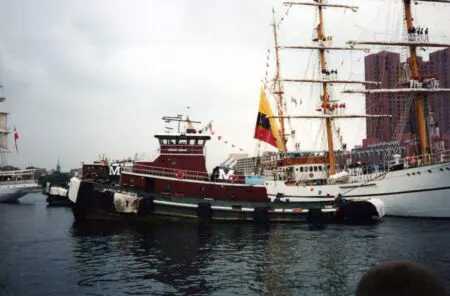
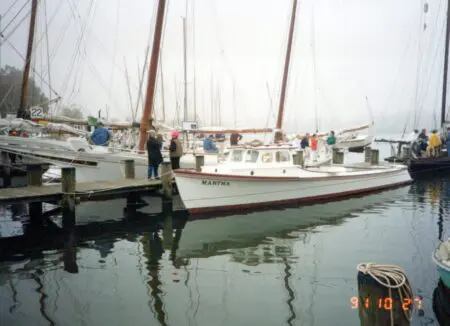
Back in the early-to-mid 1990s, before our sailboat cruise to Florida, we owned a house just south of Annapolis. I worked as a yacht brokerage receptionist, and Mark held down a position at Annapolis’ best marine chandlery (boat gear store). We loved the city’s boating culture, and we frequently walked the marina docks looking for interesting vessels.
We were also excited about the United States Naval Academy’s generations-old presence in Annapolis. Back in 1845, the Naval School first opened on a 10-acre former Army installation. Seven professors taught a class of 50 midshipmen, shaping them into the Navy’s future leaders.
In 1850, the fledgling institution became the United States Naval Academy (or USNA). The new curriculum contained a requirement that midshipmen must spend four years at the Academy. During the summers, the young men would receive shipboard training (and they still do).
Today, the Naval Academy campus contains 338 acres, and the tiny student body is now a 4,000-person brigade. In 1976, women were first admitted to the respected service academy.
Like other United States colleges and universities, the United States Naval Academy honors its graduating seniors during springtime ceremonies. However, the Naval Academy’s graduation festivities last for an entire week.
Commissioning Week recognizes the graduates who are receiving their U.S. Navy officer commissions. Concerts, church services, awards ceremonies, and the Superintendent’s Receptions are just a few Commissioning Week events.
The U.S. Navy Blue Angels are the highlight of the Naval Academy’s Commissioning Week. On Tuesday, these world-class aviators announce their presence with a thundering arrival, circle, and flight rehearsal. The Blue Angels’ Wednesday afternoon flight demonstration is always a real crowd pleaser. On Friday morning, the graduating midshipmen’s commencement is capped off by a celebratory Blue Angels flyover.
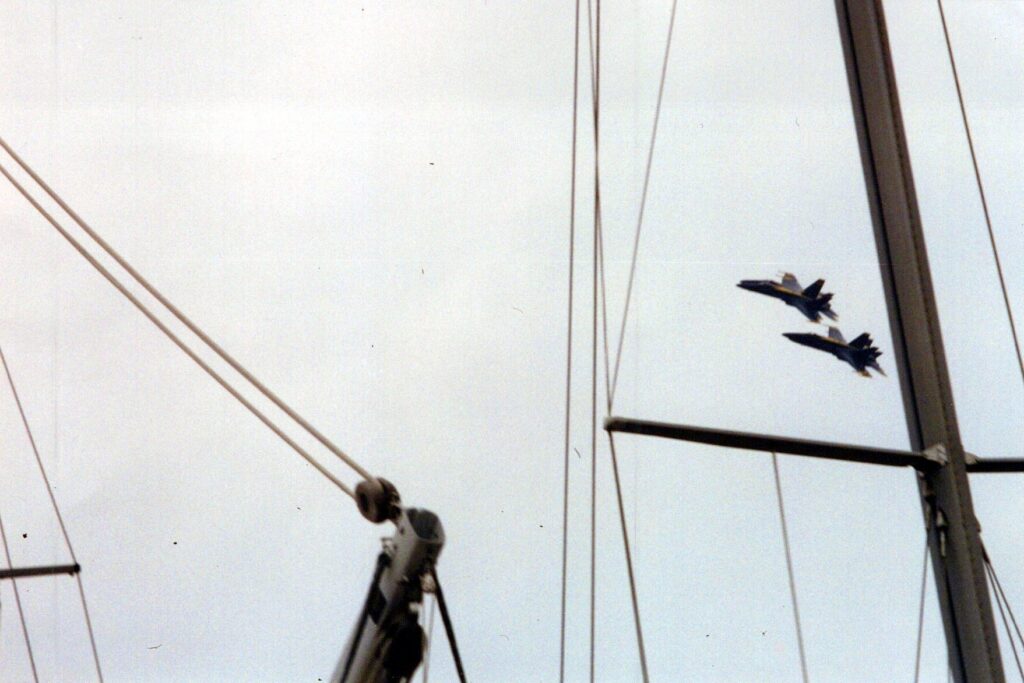
For safety reasons, the Blue Angels F/A-18 Hornet pilots perform their formation maneuvers high above Annapolis (in plenty of empty airspace). However, individual aircraft frequently fly much lower — screaming down the wide, gently winding Severn River as spectator boats’ crews cheer in approval.
While working at the yacht brokerage, I saw (and heard) snippets of several Blue Angels performances. A couple of times, I took an extra-long stretch break out on the deck, squeezing in every possible moment of viewing time.
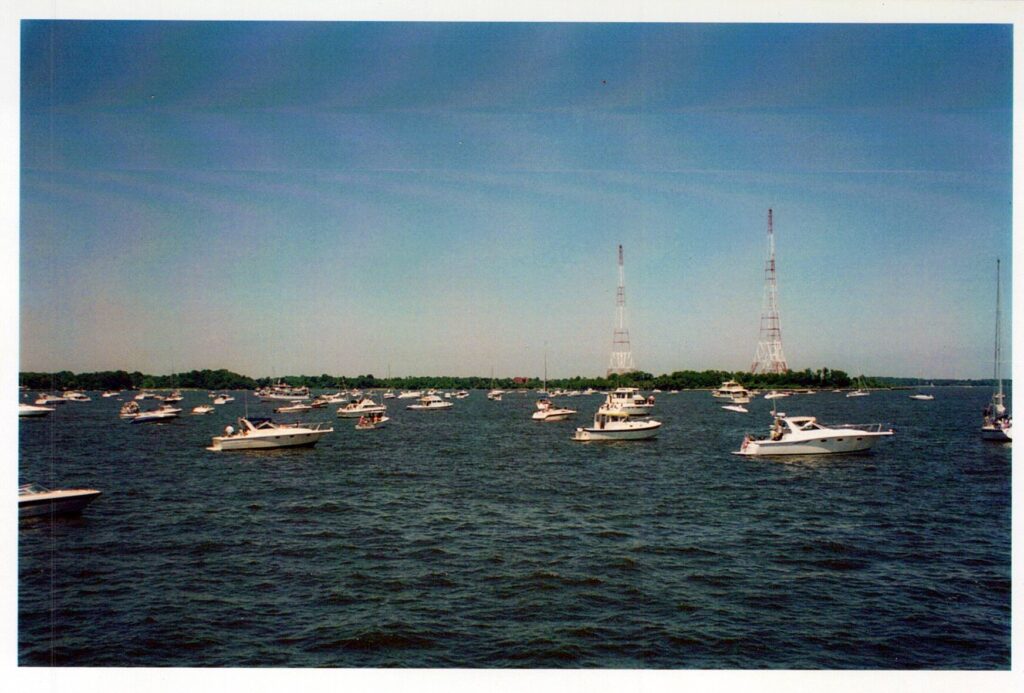
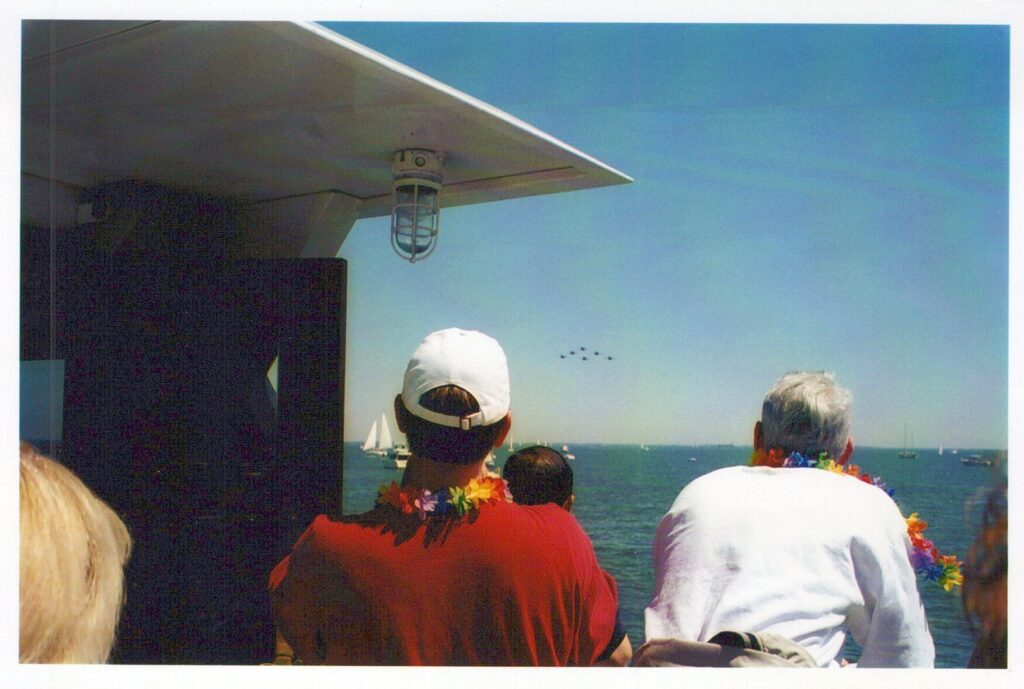
But on one memorable occasion, I had a front-row seat for the Blue Angels flight demonstration. I was lucky to be on a boat, bobbing on the Chesapeake Bay just outside the Severn River (in Annapolis). Given Annapolis’ claim as “The Sailing Capital of the USA,” it’s no surprise that you could almost walk across the decks of the sailboats anchored in the Severn. Multiple powerboat crews also came out for what promised to be an epic Blue Angels flight demonstration.
My Blue Angels viewing opportunity took place during a well-organized Singles on Sailboats (SOS) weeklong cruise. Back in the mid-1980s, I joined this large (about 900 members) Chesapeake Bay sailing club. Although the singles’ aspect had some appeal, I really wanted to learn to sail — and I did. I crewed on sailboats ranging from 25-47 feet captained by sailors of varied experience levels.
Over the years, our SOS fleet cruised to many beautiful anchorages, where the boats gathered for a raft-up and potluck dinner. Occasionally, the SOS fleet would visit a dock-and-dine restaurant or other venue that accommodated multiple boats. My experiences with SOS weekend (and weeklong) cruises prepared me well for co-owning our Bristol 30 sailboat Santorini.
On that Friday in May, our SOS boat’s crew (and likely other spectator boats’ crews) were chomping at the bit, waiting for the Blue Angels flight demonstration to begin. Finally, the first performance airplane began to cross our field of view.
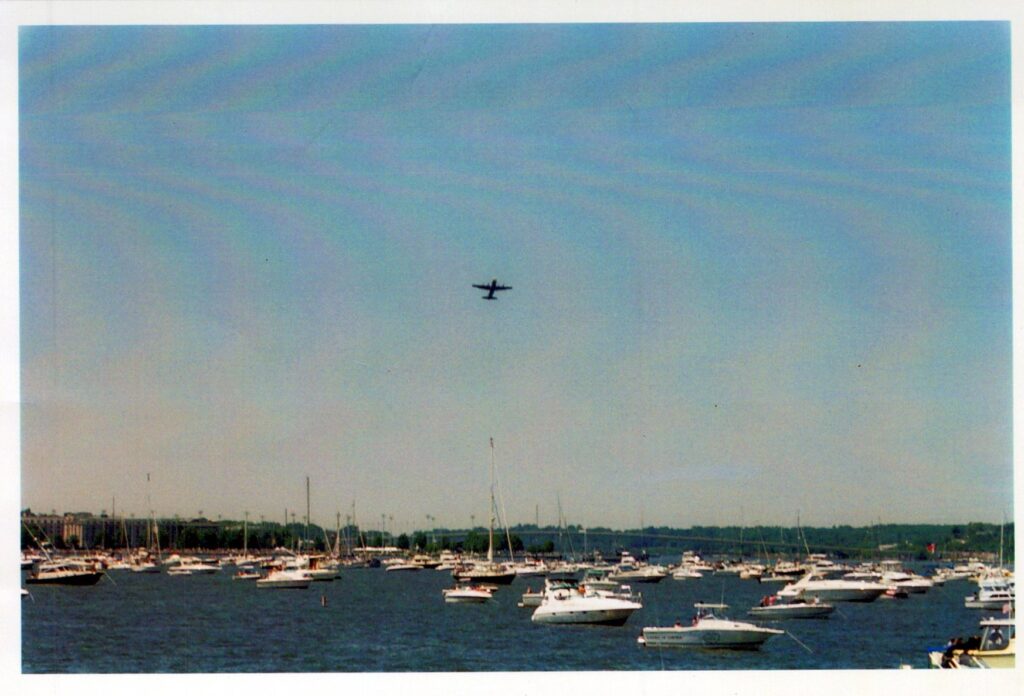
But wait — that’s not a high-tech Blue Angels jet! It’s Fat Albert, the C-130 Hercules airplane flown by its all-Marine crew. Since 1970, the C-130 Hercules’ crew of three pilots, a navigator, two flight engineers, a loadmaster, and a flight mechanic has supported every Blue Angels performance. Flying over 140,000 miles every year, Fat Albert hauls the Blue Angels’ mountain of gear. A total of 40 support and maintenance personnel also contribute to each successful event.
Chunky Fat Albert plays a key role in every Blue Angels flight demonstration. Since 1975, every performance has included a 10-minute exhibition of the C-130 Hercules’ tactical capabilities. The lumbering cargo and troop transport airplane executes high-powered climbs and turns, all vital combat maneuvers. On land, Fat Albert would demonstrate a STOL (short takeoff and landing) combat landing during which the aircraft nails a complete stop in under 1,000 feet. During this over-the-water airshow, Fat Albert happily meandered off into the horizon.
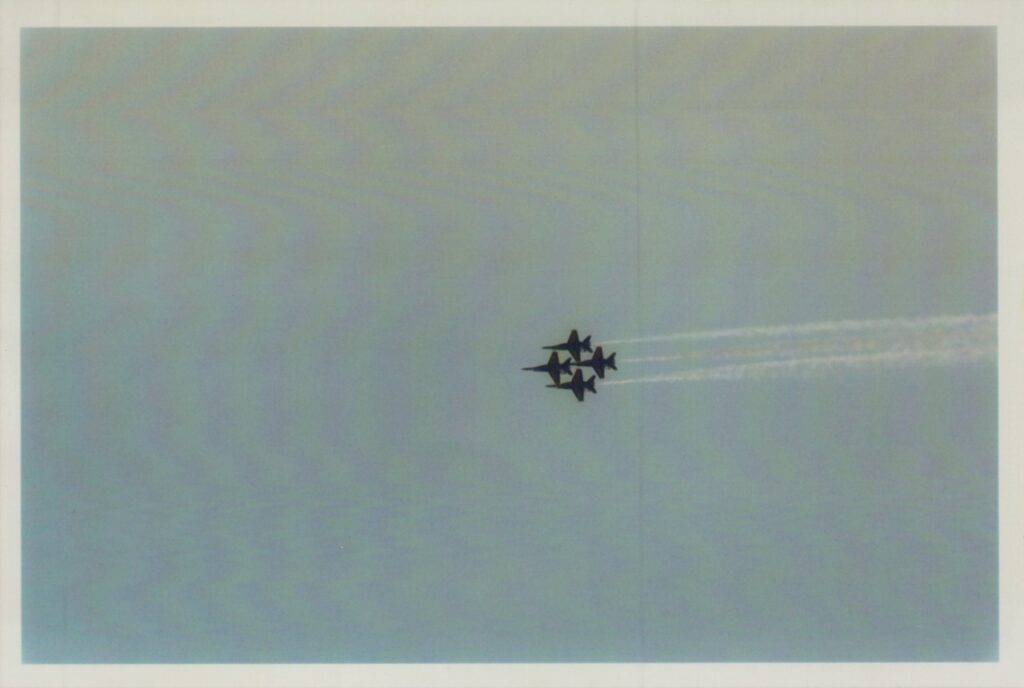
Finally, the big moment arrived. Out of nowhere, two Blue Angels F/A-18 Hornets streaked across the sky seemingly just above the forest of sailboat masts. Much higher up, the remaining four-jet fleet jockeyed into place for the classic “Diamond” formation.
In this amazing example of precision flight, the four jets maintain positions only 18 inches apart at speeds over 400mph. Although the pilots are guided by their instruments, they rely primarily on their visual abilities. Any small mistake could have disastrous consequences.
Several more blindingly fast maneuvers followed. One jet blasted down the center of the Severn River, likely no more than 100 feet above the water. A six-jet formation passed not far above our heads. We couldn’t get enough of this 360-degree spectacle. In their final maneuver, four Blue Angels jets seemingly flew straight up together before splitting off and disappearing over the horizon.
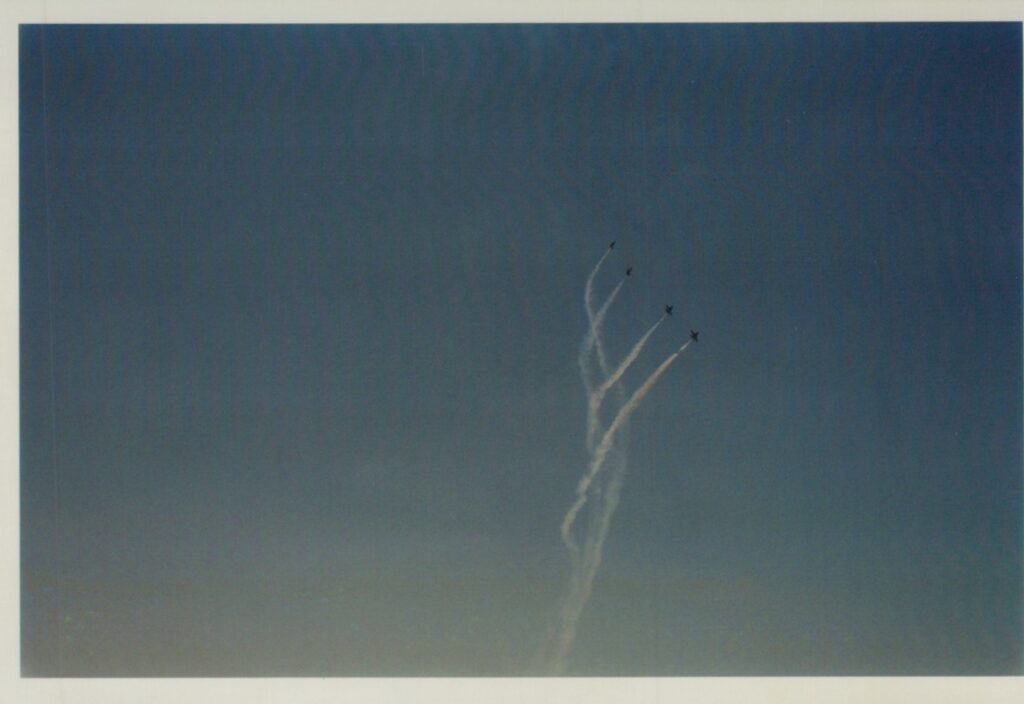
I’m happy to say that I’ve seen several Blue Angels flight demonstrations. Watching this world-class team of precision aviators never gets old, and I’m in awe of their flying skills. Now that I live in central Florida, a trek to Naval Air Station Pensacola (the Blue Angels’ home base) is within reach. The Blue Angels headline two major airshows each year, and I would love to see these world-class jets (and their highly accomplished pilots) once again.