
 War and Religion–Blood Brothers in History
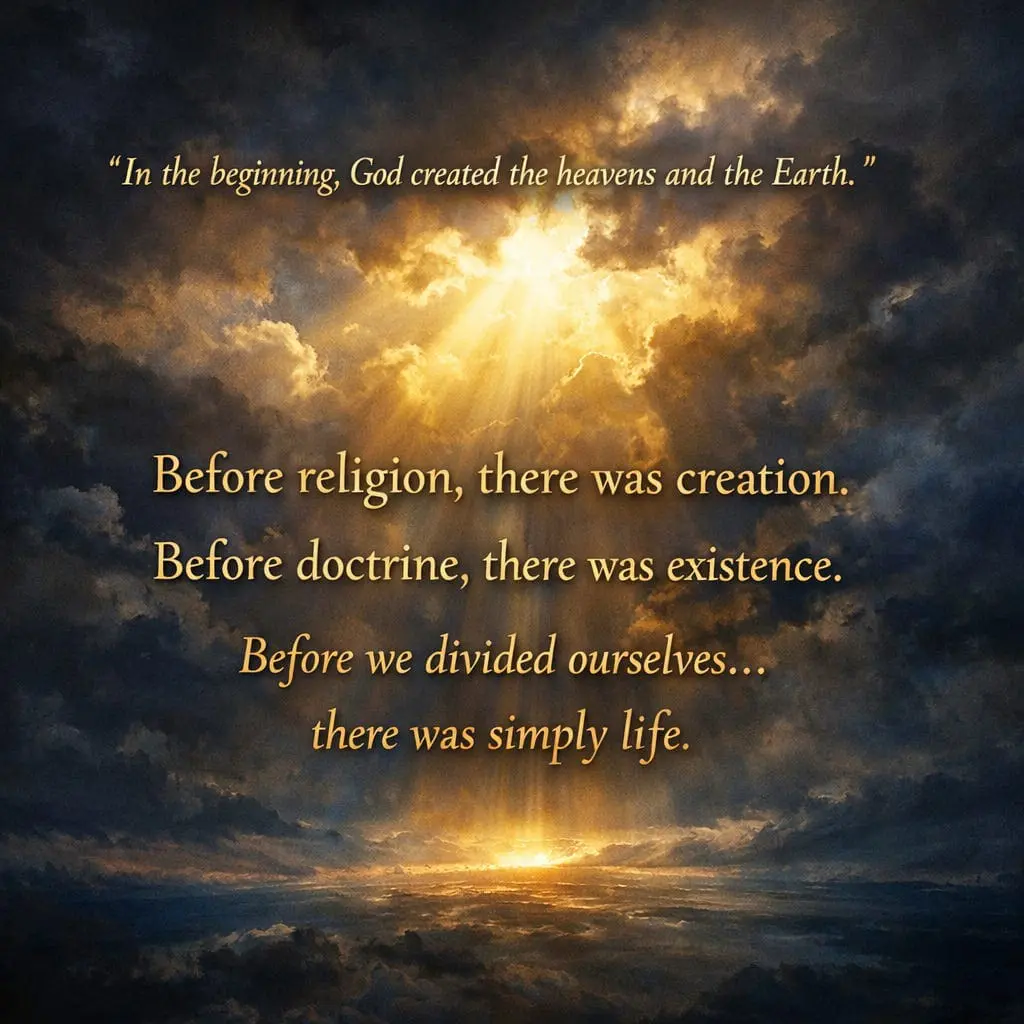
“In the beginning . . .”
It’s one of the oldest quotations in human history. Before religion, there was creation. Before doctrine, there was existence. Before we divided ourselves,
there was simply . . . life.Today, we are, once again, staring at war.
Tensions with Iran dominate the headlines. Their leaders call America “the Great Satan.” Ours label them “Islamic terrorists.” Each side speaks with moral certainty. Each claims righteousness. Each sees the other as something less than human.
But beneath the politics, the strategy, the oil, the power—there’s something older at work.
Something far more dangerous.
Difference.
We like to think modern wars are about policy or Security. But scratch the surface, and a familiar story emerges:
And long before that—going back centuries, even millennia—religion has been used as both banner and battlefield:
Different continents. Different centuries. Different names.
Same underlying message:
“Our God. Our truth. Our people.”
Here’s the paradox.
Religion, at its best, teaches:
Compassion
Community
Moral responsibility
Hope beyond our brief time on earth
It gives people meaning. Structure. A sense that life matters.
But the moment belief meets difference, something flips.
Instead of:
“This is what I believe…”
It becomes:
“This is what you must believe—or you are wrong.”
Or worse:
“…you are the enemy.”
Religion teaches compassion—until it meets difference. Then, too often, it teaches fear.
I learned that lesson early.
As a kid, at age 11, I moved to a new neighborhood. I met an older boy who asked me what church I attended.
I told him:
“I don’t go to church. I go to synagogue.”
He punched me in the face.
No debate. No discussion. Just . . . violence.
Why?
Because somewhere along the way, he had been taught that “different” meant “bad.”
That’s what antisemitism is.
That’s what racism is.
That’s what so many of our conflicts boil down to.
America is supposed to be different.
A true melting pot of:
religions
ethnicities
cultures
beliefs
and, yes, non-belief
We worship in churches, synagogues, mosques, temples—or not at all.
We eat different foods. Speak with different accents. We’re different colors. Carry different traditions.
That’s not our weakness.
That’s the whole point.
Even today, the same fault lines persist.
Take LGBTQ+ rights.
At their core, many objections are rooted in religious doctrine—beliefs about what is “acceptable” or “sinful.”
But here’s the question we rarely ask:
Why should anyone care how another person lives—
if they obey the law, harm no one, and seek happiness?
And an even bigger one:
If there is a God, does He—or She—really care how we worship?
Or whether we worship at all?
After that beating that shocked the nation, Rodney King asked a simple question:
“Can’t we all get along?”
It sounded naïve to some.
But maybe it was the most sophisticated question of all.
Because getting along doesn’t require agreement.
It requires acceptance.
What if we judged each other not by:
religion
ethnicity
ideology
But by something simpler:
Do you treat others with dignity?
Do you do no harm?
Do you contribute to peace rather than conflict?
That’s it.
No theology required.
If the 21st century has taught us anything, it should be this:
War is not a solution.
It’s an admission that we’ve run out of imagination.
Afghanistan. Iraq. And now, Iran.
Different places. Same outcome: Lives lost, futures erased, divisions deepened.
Here’s what I believe: If there is a God, I don’t think He’s keeping score based on what building you enter on Friday, Saturday, or Sunday, what words you use to pray, or whether you pray at all. I think the measure is simpler:
Did you Love your neighbor?
Did you do no harm?
Did you try to live in peace?
In a world that still hasn’t answered Rodney King’s question, I’ll ask it again:
Can’t we all get along?
Because if we can’t, history suggests we already know what comes next. And it’s never good. Let’s hope this latest conflict ends quickly—and with as little loss of life as possible.
But hope isn’t enough.
At some point, we have to decide:
Are we going to keep defining ourselves by our differences or finally start living by what we share?

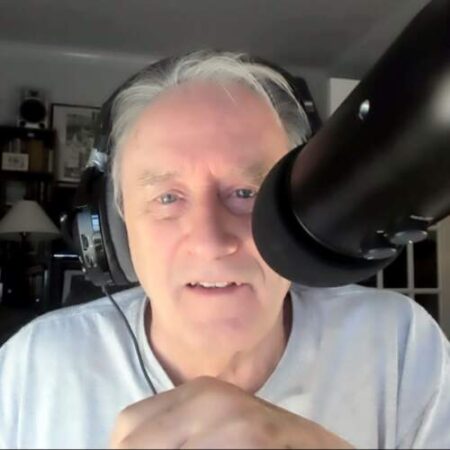
Mark M. Bello is an attorney and award-winning author of the Zachary Blake Legal Thriller Series, ripped-from-the-headlines, realistic fiction that speaks truth to power and champions the rights of citizens in our justice system. These novels are dedicated to the social justice movement. They educate, spark discussion, and inspire readers to action. One of these was “Betrayal of Justice, a blistering novel about presidential misconduct and hypocrisy” For more information, please visit www.markmbello.com.
The post Faith, Fear, and the Fiction of the “Other” appeared first on Lean to the Left.