

Every generation of women has played a unique role in shaping history, but baby boomer women stand out as a revolutionary force that bridged tradition and transformation. Unlike their mothers and grandmothers, who often lived within rigid societal expectations, baby boomer women emerged into adulthood during a time of enormous social, political, and economic upheaval. They came of age during the rise of feminism, contraception, civil rights movements, and unprecedented technological progress. As a result, they redefined what it meant to be a woman in modern society.
Imagine the sharp contrast between a grandmother who never imagined working outside the home and her granddaughter becoming the first woman in her Family to attend college or climb the corporate ladder. The differences are not just generational—they are cultural, educational, political, and deeply personal. Baby boomer women took the foundations laid by their foremothers and built entirely new structures of freedom, ambition, and self-definition.

The term “baby boomer” refers to the demographic born during the post-World War II baby boom, between 1946 and 1964. This was a time marked by rapid economic Growth, suburban expansion, and a strong emphasis on family values. But while society seemed stable on the surface, beneath it, a storm of change was brewing—especially for women.
Baby boomer women were raised in a world that still largely viewed women through the lens of domesticity. However, they came of age in the 1960s and 1970s, when the feminist movement gained momentum, challenging the status quo and demanding equal rights in Education, Employment, and reproductive freedom. This duality—being raised with traditional values but entering adulthood in a rapidly changing world—shaped baby boomer women into pioneers of transformation.
They were the first generation of women to grow up with television, to witness the civil rights movement unfold in real time, and to see women like Gloria Steinem and Betty Friedan openly question societal norms. Their mothers may have tolerated inequality in silence, but boomer women were handed the microphone—and they used it.
Several pivotal events shaped the worldview and choices of baby boomer women:
These events created a social landscape where baby boomer women felt a stronger sense of agency than their foremothers. They weren’t content to stay in the background—they wanted a seat at the table.
Baby boomer women redefined Marriage in ways that would have shocked their mothers and grandmothers. While previous generations were often married by their early twenties—sometimes even late teens—boomer women began to delay marriage. Why? Because for the first time, they had other options. College, career, and personal growth began to take precedence over early marriage and childbearing. The average age of first marriage rose steadily through the baby boomer years. Divorce, once taboo, also became more common and socially acceptable during their lifetime. No longer were women expected to “stick it out” in unhappy or abusive marriages just to avoid shame. Boomers helped normalize the idea that leaving a bad relationship was not a failure but an act of self-preservation.
Many of us married for Love, not just economic Security. And more importantly, we began to expect equality in our marriages. We weren’t content being subservient homemakers—we wanted partnership, shared responsibilities, and mutual respect.
When it came to raising children, baby boomer women brought a new philosophy to the table. Their mothers and grandmothers often relied on authoritarian Parenting, emphasizing obedience, discipline, and emotional restraint. Baby boomer mothers, however, leaned more toward nurturing, open communication, and child-centered approaches.
We were more involved in our children’s education and emotional well-being. We encouraged individuality, creativity, and self-expression. This generation of mothers was also the first to openly discuss things like sex education, Mental Health, and personal growth with our kids—topics that had been taboo for decades. We didn’t just raise children—we raised future feminists, activists, and independent thinkers. Our approach reflected broader values of equality, self-determination, and emotional intelligence, reshaping what it meant to be a mother in the modern world.
One of the most profound shifts brought about by baby boomer women was their mass entry into the workforce. While their grandmothers may have worked out of necessity during wartime and their mothers may have returned home afterward, baby boomer women made work a long-term part of their identity. By the 1970s and 1980s, it was common to see women balancing careers and families. They were no longer working just to “help out” their husbands—they were building careers, chasing promotions, and demanding equal pay. This economic independence changed everything. It gave them the power to leave bad marriages, make big financial decisions, and chart their own paths.
Jobs weren’t just a means to an end; they became an expression of identity and capability. This shift helped reshape the Economy, workplace culture, and even legislation, as women began to demand workplace protections, maternity leave, and anti-discrimination policies.
Striking a balance between work and home became one of the biggest challenges—and triumphs—for us. We were the first generation expected to “do it all”—excel in careers, raise families, and maintain households. It wasn’t easy, and many felt the pressure of perfectionism. Still, they persevered. Some chose to focus primarily on career growth, others prioritized family, and many tried to do both. The key difference is that they had a choice. Unlike their mothers and grandmothers, who often had no say in the matter, baby boomer women were carving out their own definitions of success.
The phrase “working mom” entered the mainstream during this era. Women began advocating for flexible schedules, job-sharing, daycare services, and parental leave. Their efforts paved the way for modern work-life balance policies and reshaped societal expectations of both mothers and fathers.
Boomer women are the bridge between the traditional values of their grandmothers and the digital world of their grandkids. They understand the importance of hard work and discipline, but they also appreciate the value of Innovation and self-care. They’ve had to adapt to rapid changes in Technology, culture, and politics, often faster than any generation before them. And they’ve done it with grace, curiosity, and strength. They teach younger generations not to be afraid of change, but to embrace it. The bridging role isn’t easy—it comes with challenges. Differences in values, technology, and communication styles can cause tension. But boomer women have shown that empathy, patience, and open-mindedness can overcome those gaps. They’re not just ancestors, they’re allies.
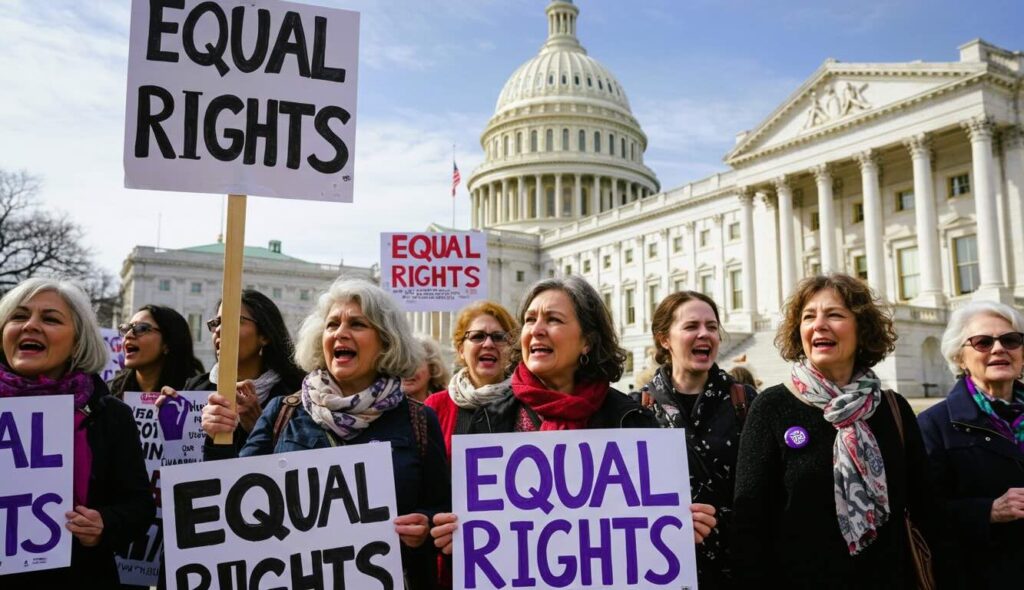
Baby boomer women are not just different from their mothers and grandmothers—they are revolutionaries who changed the world. Raised in the shadow of traditional values, they stepped into adulthood at a time of profound change and seized the moment. They were the first to widely access birth control, pursue higher education in large numbers, and break into male-dominated professions.
They reshaped the workforce. By proving that women could be doctors, CEOs, engineers, and lawmakers, they paved the way for more inclusive hiring practices and family-friendly work policies. Their contributions helped normalize dual-income households and challenged traditional gender roles. They challenged the notion that a woman’s place is in the home, fought for reproductive and workplace rights, and raised children who value empathy, equality, and justice. They aged not with resignation, but with reinvention—proving that life after 50 can be just as bold and beautiful as any other chapter.
Our story teaches us the importance of speaking truth to power, Investing in Personal Development, and never settling for less than we deserve. We proved that age should never define a person’s potential—that you can start a business at 60, learn a new skill at 70, or make a political comeback at 80.
Perhaps our most profound Legacy is the example we set. We modeled courage, adaptability, and resilience—not just through accomplishments but through our failures, reinventions, and continued commitment to growth. We showed that progress is not a straight line but a journey of persistence. From the boardroom to the picket line, from raising kids to running companies, baby boomer women have done it all—and they’re still not done. Their lives are a testament to resilience, evolution, and the ongoing fight for equity. Their legacy is not just something we honor, but it’s something we build upon.