

Thursday - June 4th, 2026
Apple News
×

What can we help you find?

Open Menu

Social isolation is not inevitable. It is reversible.

Rebuilding Connection for Seniors in Our Community 2

But communities must be designed, and redesigned, to support engagement at
every age and ability.

Around the
country, municipalities are doing this through the Age-Friendly Communities
framework
, endorsed by the World Health Organization and adopted by many
Canadian cities. The framework is simple: create environments where seniors can
participate fully, safely, and with dignity.

What does
this look like?

It looks
like safer crosswalks with longer signal times.


  • Benches placed where people actually walk.

  • Clear signage that helps those with cognitive changes.

  • Bus stops with seating and shelter.

  • Programs in multiple languages.

  • Technology support that doesn’t assume everyone learns the same way.

  • And community events where seniors participate as leaders, not just as
    attendees.

These are
not expensive changes, but they are transformative ones.

Every
improvement in accessibility, transportation, communication, or program design
opens another door to connection.

No single
organization can solve social isolation alone. But when we coordinate our
efforts, transportation, recreation, housing, public safety, libraries, health
partners, we create a safety net strong enough to keep people connected before
isolation takes hold.

Improve the physical and social environments that shape senior
participation, including accessible pathways, seating, sound systems in
community halls, age-friendly communications, and programming specifically
designed for those experiencing life transitions such as bereavement,
Retirement, or changes in health.

Small
improvements create big results.

  • ·       
    A single
    bench can turn an impossible walk into a possible one.
  • ·       
    A volunteer
    driver program can reopen a social circle.
  • ·       
    A friendly
    phone call can keep someone grounded after a major loss.

Our
community already cares deeply about seniors. What we need now is a more
coordinated, more intentional approach, and a clear recognition that this work
benefits everyone.

  •         When
    seniors stay socially connected, they stay healthier.
  •         When they
    stay healthier, they delay or prevent costly health crises.
  •         When they
    stay engaged, they volunteer, mentor, and strengthen community life.

·       
A connected
senior population is not just a social good, it is a community asset.

  •         Imagine our
    city one year from now if we choose to lead boldly on this issue.
  •         Imagine
    seniors who feel noticed and valued.
  •         Imagine
    neighbourhoods where benches and bus stops invite, rather than exclude.
  •         Imagine
    programs co-designed with seniors from every background.
  •     Imagine an age-friendly standard woven into every municipal decision.
  •     Imagine an age-friendly standard woven into every municipal decision.

Social
isolation is a challenge we can solve, but only if we choose to work together
with Clarity, compassion, and commitment.

Originally Published on https://boomersnotsenior.blogspot.com/
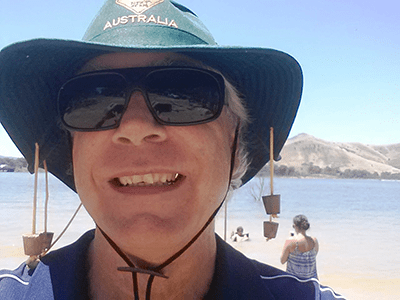
I served as a teacher, a teacher on Call, a Department Head, a District Curriculum, Specialist, a Program Coordinator, and a Provincial Curriculum Coordinator over a forty year career. In addition, I was the Department Head for Curriculum and Instruction, as well as a professor both online and in person at the University of Phoenix (Canada) from 2000-2010.

I also worked with Special Needs students. I gave workshops on curriculum development and staff training before I fully retired

Posted in:
Royce Shook
Tagged with:
0 Comments
Oldest
Newest Most Voted