
Like almost everyone, I tend to be pretty reflective at the start of the new year. I’m that way in general, but this year even more so. Beyond the obvious reason—the calendar turning—I think two things have pushed me to reflect more deeply.
First, Dustin and I are gaining energy and momentum with the Impactful Coaching Project (ICP). It’s slowly growing, and we believe the message matters. In many ways, ICP was born out of struggles we both experienced as athletes, coaches, and young leaders. We care deeply about helping others avoid some of the mistakes we made and want to find ways to continue to work with others to help.
Second, I was asked to be the speaker at my high school’s Mentor Day. I’m deeply honored and want it to be meaningful for the students. As I started working on the speech over the past few days, I kept coming back to many ICP principles—some I’ve written about here and others I haven’t. In my reflective state at the start of the new year, I decided to test a few of those ideas in this post.
My freshman year of college did not go well. Academically, it was hard. Athletically, I struggled. Even though I tried not to, I had built much of my identity around success in sport. When that success started to slip, it created serious self-doubt and identity issues.
The following summer, I played in a college summer baseball league in upstate New York. I went there hoping for a fresh start and a chance to prove myself. At the time, summer leagues were a big deal, and I saw it as my opportunity. Instead, it exposed how fragile my confidence had become. I struggled again.
I remember walking back to the dugout after a bad at-bat in our first exhibition game, feeling empty and unsure of who I was or what I was going to do next. It sounds dramatic—and I judge myself for it—but I can still close my eyes and return to that moment at Maple City Park in Hornell, New York. Ironically, those bad at-bats came against a pitcher who eventually reached the Major Leagues and threw a perfect game. I returned from that summer and quit baseball for a year.
Sometime during that year away, I decided to play again. I wouldn’t have said this out loud then, but I remember thinking: sports are kind of dumb. They are manufactured adversity—something into which we pour enormous time, energy, Money, and identity. What I eventually realized wasn’t that sport has no value, but that achievement without meaning is a terrible place to ground identity—especially in sports.
I grew up in a high-achievement environment. In many ways, it was good for me. The positives outweighed the negatives. It taught me how to work, and I’m grateful for that. But environments like that also teach lessons quietly. One of those lessons is that metrics matter most: scores, class rank, test scores, wins.
When things go well, that system can feel stable—though there’s often fear about what comes next. When things go poorly, it can be crushing. If achievement becomes the primary measure of worth, confidence disappears quickly when performance drops. I see this now in athletes, in coaches, and still in myself at times. When results define identity, setbacks feel personal, perspective shrinks, and blame—of ourselves or others—follows.
Achievement itself is not bad. It motivates effort and excellence. In fact, I believe we have a responsibility to pursue excellence and honor the gifts God has given us.
The most important lessons I’ve learned, however, did not come from achievement. They came from people and setbacks. None of the meaningful progress in my life happened alone. It came from people who told me the truth and stayed when things weren’t impressive. From teams that endured hard seasons but stayed connected and kept working together.
At my high school, we memorized a poem by Sir Walter Scott about interdependence. One line has stayed with me:
High though his titles, proud his name,
Boundless his wealth as wish can claim;
Despite those titles, power, and pelf,
The wretch, concentred all in self,
Living, shall forfeit fair renown,
And, doubly Dying, shall go down
To the vile dust, from whence he sprung,
Unwept, unhonored, and unsung.
At a core level, we know that selfishness and achievement alone mean very little. Though this poem was written in the early 1800s, the human desire to be known—and the danger of grounding identity in self alone—hasn’t changed.
Our research with the Impactful Coaching Project reinforces this. When we ask athletes what motivates them, Relationships consistently rank at the top—especially relationships with teammates. Interestingly, newer data even suggests that being primarily motivated by winning can negatively impact performance.
I don’t remember where I first heard this, but it rings true: Achievement pursued in isolation becomes fragile; within community, it gains meaning. The same is often true of failure.
This is where the 3 C’s of the Impactful Coaching Project matter. They provide a shared language and framework that grounds achievement.
Competence still matters. Athletes want coaches who know their craft and help them improve. It’s hard to build a healthy community when you lack credibility in the very thing that brings people together.
Care matters because athletes need to know they are valued even when performance fluctuates. If that sounds soft, the research on psychological safety and performance is extensive and clear.
Constancy may matter most. Athletes closely watch whether a coach’s tone, attention, and standards change when things go poorly—and whether a leader’s character remains stable.
When competence is paired with care and delivered with constancy within community, achievement becomes healthy. Without those elements, achievement can become empty.
One practical takeaway
This week, choose one athlete and have a conversation that has nothing to do with performance. Ask how they are doing. Listen without correcting. Be the same with them whether they are playing well or not.
That doesn’t lower standards. It strengthens the foundation beneath them.
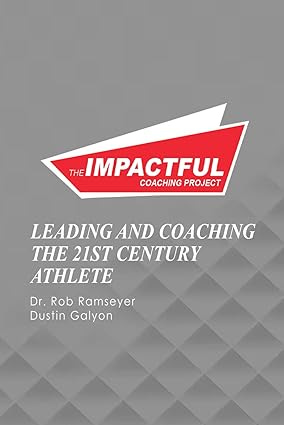
Check out our book!
Things That Are Making Us Think
A good reminder for constancy. Another one of my favorite poems.