

Thursday - June 4th, 2026
Apple News
×

What can we help you find?

Open Menu

Episode 189, John S. Rock, Never Quit, Part 1

  1. Episode 189, John S. Rock, Never Quit, Part 1 Stephen Middleton 10:39

John S. Rock was born in 1825 in New Jersey, a state that called itself free while still living with the long shadow of slavery. New Jersey’s Gradual Emancipation Act of 1804 promised freedom only slowly, binding black children to long indentures—twenty-one years for females and twenty-five for males. Rock, however, was born to free parents who understood that in a slaveholding republic, Education was not simply uplift but self-defense. From an early age, his abilities were obvious. As a teenager, he became a teacher and was drawn into the abolition movement, doing adult work and absorbing adult ideas long before most young people were given such responsibility.

 Yet ambition soon collided with what Rock would come to understand as the “law of race.” Teaching was not enough. He aspired to become a physician, but medical schools repeatedly rejected him. His talent was never in question; race was. Rather than quit, Rock adapted. His first pivot was strategic. He turned to dentistry, a profession that allowed entry through apprenticeship, examination, and licensing rather than formal admission to medical school. He trained under established practitioners, passed the required examinations, and became a licensed dentist in New Jersey.

 Rock did not abandon his original goal. While practicing dentistry, he continued studying medicine independentlyunder white physicians willing to teach him. Determined to secure formal credentials, he relocated to Philadelphia and enrolled at the American Medical College of Philadelphia. In 1852, he earned his medical degree. By the early 1850s, John S. Rock was both a physician and a dentist—respected,professionally established, and deeply embedded in black community life. He moved easily among political thinkers and reform leaders, positioning himself for the next chapter of his life, where persistence would again meet resistance, and adaptation would once more become a tool of freedom.

 Part 1 traces how John S. Rock learned an enduring lesson early: when doors close because of race, progress requires resilience, strategy, and the refusal to quit.

 Contact Information

Have a story, a question, or a possibility you’re exploring? Email Dr. Middleton: [email protected]

Break Free from Emotional Distress:A Practical Guide and Personal Journey by Stephen Middleton is available on Amazon.
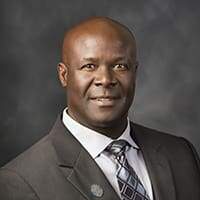
Stephen Middleton PhD, Possibilityman, Podcaster & Transformational Coach

I grew up in a rural community in South Carolina. My father was a general laborer, and he, along with my mother and their eight children, were sharecroppers. I am their sixth child, and I spent my formative years picking cotton and plowing with a mule. I gained a burst of insight when I was 15 years old from an internal consciousness that told him I could do better with his life. I heeded the inspiration and enrolled in college, graduating with honors. I earned a Master of Arts from The Ohio State University and a doctorate from Miami University (Ohio). I received a Golieb post-doctoral fellowship from the New York University School of Law, where I enrolled in the first-year curriculum and the Legal History Seminar. I began teaching at Wilberforce University in Ohio. I also taught at the University of Cincinnati and was a long-time constitutional history professor at North Carolina State University. I was the inaugural director of the African American Studies Program at Mississippi State University. I have lectured and presented scholarly papers in the United States, Canada, and Europe. I presented at the American Society of Legal History, the British Legal History Association, the Southern Historical Association, and the Association of African American Life and History. I have lectured at the University of Washington, Cambridge University, and Keele University in the United Kingdom. My scholarly endeavors have taken me to three African countries, including Ghana, where the University of Ghana boasts an African Studies program.

As a speaker and workshop facilitator, I presented “Four Elements of Progressive Constitutionalism” in the Amicus Curiae Lecture series at Marshall University (2012); “Abraham Lincoln and Executive War Powers,” Wilmington College (2013); “Reconstruction and the Politics of Expedience,” Old Capitol Museum in Jackson, MS (2015); and facilitated teachers at summer seminars for the National Endowment for the Humanities at Georgia State University in 2016 and 2018.

Now retired from academic work, I am the founder of The Possibility-Action Network and host of The Possibility-Action Network Podcast. I am a speaker, transformational coach, and social entrepreneur.