

Why is buying a home harder today? Here’s a look at income gaps, rising housing costs, and historic trends that reveal how the market changed—and what it means for Gen Z buyers.
So, let’s look at the “why” of all the whining, gnashing of teeth and crying poor mouth by Gen Zs and others who can’t purchase a house. Here’s the #1 reason, lack of sufficient income!! #2 Insufficient credit.
The bigger question is how did we get here?
Let’s look at some history; it’s a great teacher.
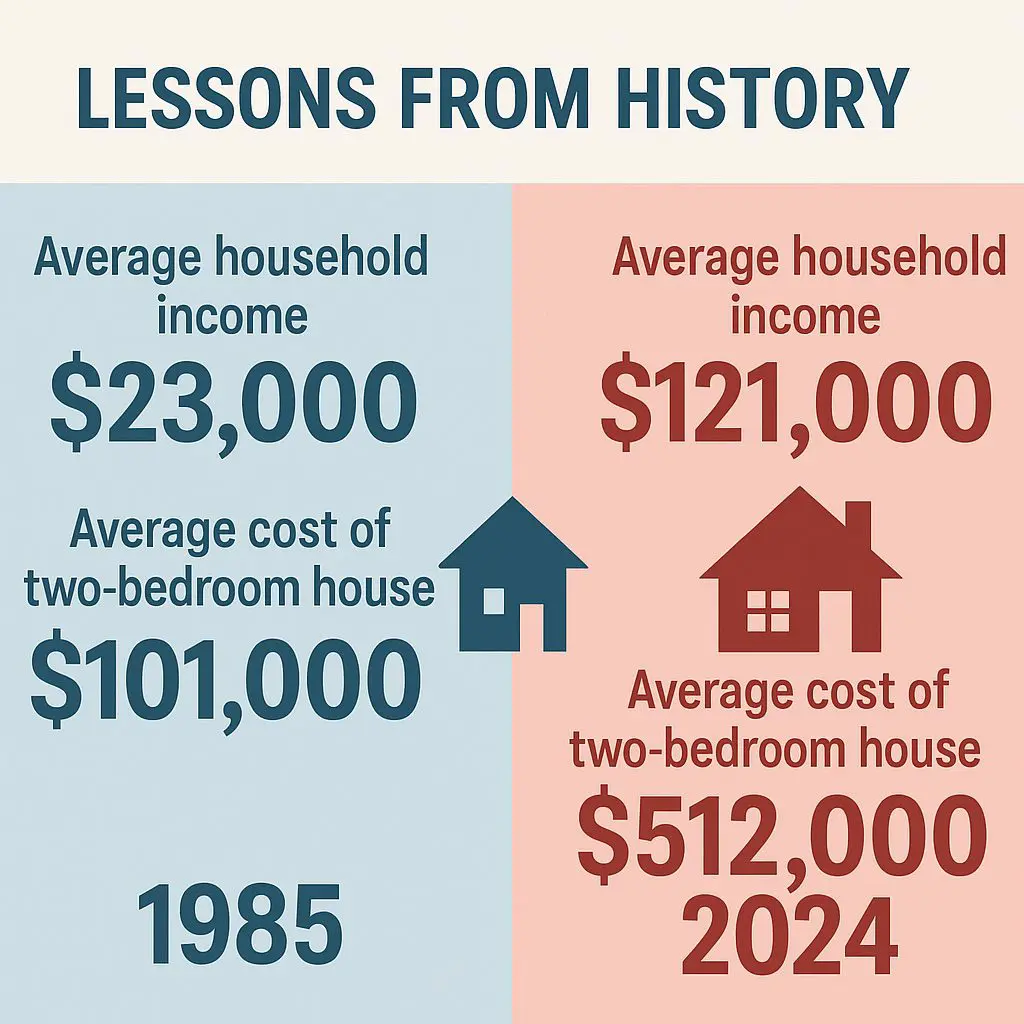
In 1985 the household average income was $23,000. The Median was $27,000. Half above, half below. That’s a 17% “spread” between Average and Median.
The average cost of a two-bedroom home, (not including Condos) was $101,000 across the USA.
The Median cost (half more, half less) was $84,000; a “spread” of 16.8%. So, the cost of housing and wages were “in sync”.
Also, compared to Household Income, a house was approximately 4.5 times your income, but mortgage interest rates were high, just slightly under the all time high, at 12.4% for 30 year fixed conventional mortgage. Other rates were available as ‘variable rates’ (adjustable) from 7% to 10% depending on terms and credit worthiness.
1985 was a ‘recovery’ period following the recession and high interest rates of late 1970’s and early 1980’s, very similar to today’s Economy.
So let’s recap: Housing prices were up, but so were wages proportionately, and interest rates were high, yet the housing market was good.
Average household income was $121,000, Median household income was $83,700, a huge spread of over $37,000. That is an indication of significantly MORE people in the “above” median income, a 30% “spread”. A complete reversal of the relative position in 1985, where average income was LESS that Median income. That was influenced by the high number of exceptionally high earners!!
Average cost of two-bedroom house in the USA is $512,000. The Median price is $402,000, a “spread” of $110,000 , or 21% difference between “average” and “median” price. That’s approximately a 4% change from 1985, except that interest rates are half what they were in 1985. As the average price increases, it adversely affects high demand areas, such as the Northeast, California and Mid-Altlantic regions.
So let’s recap. The median cost of a house today is approximately 4.7 times the median household income, slightly higher than those 40 years ago, with interest rates much lower, but skewed because of high demand areas where many people want to buy a house and live, because that’s where the jobs are. But things are changing, with mass migration to the Gulf Coast and Southeast USA, where everything is more ‘affordable’ and jobs and affordable housing more plentiful.
The other issue is, you can’t be an Uber driver, Door Dash delivery person, or other “gig” worker and expect the banks to take a note for 30yrs on 90% of the price of house.
Be flexible, adaptable and amenable to moving where the jobs are, and get a real job. Learn a trade, take part time work as a second job — just like your parents did. But stop the “oh woe is me” attitude and realize the economy is pretty much in the same relative position as it was 40 years ago on average; there’s just more Money on the top side of the median bar.
Look at the US after WWI, and how the factories expanded and everyone had a job, but not enough money to buy a house. The wealthy industrialists got richer and the working person toiled for minimum wages, no benefits, and small chance at promotion. Then late in the 1920’s came the big crash, and everything changed. Unions become common place and wages went way up and working families could now afford a house of their own.
Once again, history, is a great teacher, so pay attention to the lessons.