

Part 1 of this series established the problem and its history. So, the question becomes:
What can someone do if they’ve been abused by law enforcement?
The answer is not simple or always satisfying. But victims have some choices.
Before we get to courts, lawsuits, or legal remedies, here is a hard truth:
Your priority must be to get through the encounter safely.
Even if the officer is wrong.
Even if the arrest is unlawful.
Even if your rights are being violated in real time.
Resist in the moment. Do not physically or verbally escalate the encounter. This will only make things worse and could lead to:
Additional charges
Increased force
Escalation beyond control
The legal system, imperfect as it is, is designed to address misconduct after the fact, but not in the street. Perhaps that’s unfair, but it is the reality of the power differential.
Even in tense encounters, certain rights remain constant:
You have the right to remain silent
You have the right to ask for a lawyer
You do not have to consent to a search (with some exceptions)
You may record police in public, so long as you do not interfere with the performance of their duties.
And these rights apply broadly—even to non-citizens.
This last point is emphasized because one of the most persistent misconceptions is that undocumented individuals “have no rights.” That is not true. They have rights. Not all the rights that citizens enjoy—not always effectively enforced—but our Constitution protects “persons,” not just citizens.
If something goes wrong in your encounter with the police, evidence gathering is everything.
Record the interaction if you can do so safely.
Note badge numbers, names, and patrol car numbers.
If there are witnesses, obtain their contact information.
If you have been injured in an encounter with the police, seek medical attention immediately. This isn’t only for your Health and safety, but you must document your injuries as soon as possible.
Take photographs at the scene, or as soon as possible thereafter.
If you are not able to document in the moment, do so as soon as you are able. Memories fade, and evidence can easily disappear.
Most departments have internal affairs divisions.
Filing a complaint:
Creates a record
Triggers at least nominal review
Supports later litigation.
But don’t be surprised or disappointed if investigations are slow or findings favor the officer. Internal accountability is not perfect, but creating a record matters.
This is where the law can provide some measure of justice.
Under federal law, individuals may sue state or local officials for violating constitutional rights.
This includes:
Excessive force
False arrest
Unlawful detention or imprisonment.
These claims arise under what lawyers know as Section 1983, a direct descendant of the Civil Rights Act of 1871. They are the backbone of police misconduct litigation.
2. Federal Officers: A More Difficult Path
When federal agents are involved—ICE, for example—the legal landscape becomes more complicated.
Options may include:
Limited constitutional claims (often restricted by courts)
Claims under the Federal Tort Claims Act (FTCA)
Unfortunately, courts have increasingly narrowed the ability to sue federal officers, in part because of one of the most controversial doctrines in American jurisprudence:
3. Qualified Immunity
Qualified immunity protects officers from liability unless they violated “clearly established” law.
In practice, that often means:
Even serious misconduct may not result in liability
Plaintiffs must show a very similar prior case or pattern of conduct.
Supporters of immunity statutes often argue that they protect officers from frivolous lawsuits. I have written about this notion of “frivolous” on numerous occasions. Judges have the power to determine whether a case is worthless based on the facts of the case. “Immunity,” limited or broad, takes fact-finding responsibility out of the hands of judges and places it in the hands of legislators. In other words, it becomes a political issue instead of a legal issue.
Immunity shields bad conduct and is one of the biggest barriers a victim must face.
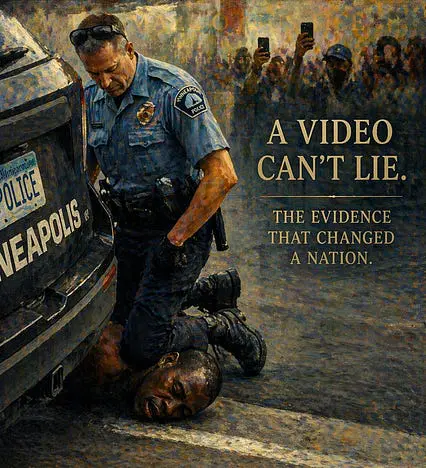 |
In extreme cases, officers may face criminal prosecution. You may recall that the officer who kneeled on George Floyd’s body until he stopped breathing was successfully prosecuted. But these cases are very difficult to prove and very dependent on clear evidence, usually video (which was used in the Floyd case).
But they do happen—and when they do, they can shift public understanding and legal standards. Again, George Floyd is the most obvious example of this phenomenon.
Even when everything is done “right”:
Lawsuits take years
Outcomes are uncertain
Settlements may not include admission of wrongdoing
Careers may remain unaffected.
That reality may be frustrating, but it underscores a broader point:
The legal system may be used as a tool for accountability, but it does not guarantee justice or accountability.
The bottom line? Accountability in these cases seldom comes from one source or action. It comes from a combination of:
Legal action
Public scrutiny
Media attention
And increasingly, citizen documentation.
In police abuse litigation, citizens, “We, the People,” play a critical role that they never expected to play.
In an increasing number of 21st-century cases, the difference between silence and accountability is not documented in court. Evidence is documented and presented by:
a bystander,
A phone,
or an audio or video recording.
We will explore a citizen’s role in documenting police misconduct more fully in Part 3, when we turn to a question that sits just beneath the surface of our laws:
Why does police abuse or misconduct continue to happen?
What is the psychology of authority—and resistance?
How do ordinary people, in uniform or out of it, cross lines they once believed they could never cross?
Because before we can change behavior, we have to understand behavior.
And that understanding begins with a necessary recognition:
The police/citizen encounter is not just a legal problem; it is a human problem as well. Stay tuned for Part 3 of the series.
FYI: If you’ve ever wondered what your rights actually mean in the real world, share this piece. Because understanding the system is the first step toward holding it accountable.

Mark M. Bello is an attorney and award-winning author of the Zachary Blake Legal Thriller Series, ripped-from-the-headlines, realistic fiction that speaks truth to power and champions the rights of citizens in our justice system. These novels are dedicated to the social justice movement. They educate, spark discussion, and inspire readers to action. One of these was “Betrayal of Justice, a blistering novel about presidential misconduct and hypocrisy” For more information, please visit www.markmbello.com.
The post How Do Police Misconduct Victims Fight Back? appeared first on Lean to the Left.