
 I remember sitting in leadership team meetings early in my time working under a superintendent who, quite honestly, operated on a different level than the rest of us.
At the time, I thought I was prepared. I had reviewed the agenda. I had thought through the issues. I had ideas ready to contribute.
And then the meeting would unfold. At the time, I didn’t fully grasp what was happening.
It wasn’t until later—through experience, reflection, and watching him over time—that I began to understand it. While I was thinking about the decision in front of us… he had already thought five or six moves ahead.
But it wasn’t just that he was ahead. He was intentional.
He didn’t just react to the conversation—he guided it.
He had already thought through the questions he would ask.
He knew who he was going to ask.
And each question wasn’t random—it was designed to move the team closer to a clear outcome.
Looking back, it felt less like a meeting and more like watching a masterclass in leadership.
He wasn’t just making decisions.
He was shaping direction.
 Here’s the reality for most leaders—and this isn’t a criticism, it’s a reflection of the environment we operate in.
Most leaders are buried in urgency.
The email that needs a response.
The situation in the hallway.
The parent concern.
The staffing issue.
And so we do what feels necessary. We solve the problem in front of us. We make the next move. We keep things moving.
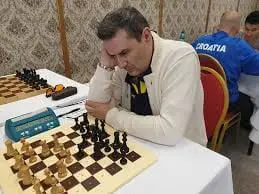
That’s checkers.
One move at a time. Reactive. Focused on what’s right in front of us. And if we’re being honest… that’s where a lot of leaders get stuck.
Not because they lack ability. But because they lack the space to think differently.
This is what I often refer to as the Cycle of CHAOS—constant reactivity, high cognitive load, and an absence of Clarity. And in that space, strategic thinking doesn’t stand a chance.
 The best leaders don’t just make decisions. They think in sequences.
They ask:
What does this decision impact next?
Who does this affect beyond today?
Where does this lead us a month from now… or a year from now?
That superintendent I mentioned earlier wasn’t guessing his way through meetings. He was thinking ahead.
Every question he asked had purpose.
Every conversation had direction.
Every decision connected to something bigger.
That’s chess.
Not just making a move—but understanding how each move sets up the next one.
If we want to lead at that level, it’s not about becoming someone different. It’s about leading more intentionally. And for me, part of that journey required something that didn’t come naturally at first. I had to learn to slow down my thinking… so I could speed up my leadership.
Here are a few shifts that can help.
Strategic leaders don’t rush decisions—they frame them. Before saying yes, they ask:
If I say yes to this, what am I saying no to next week?
Is this aligned with what matters most?
A brief pause can prevent a long-term problem.
Most decisions don’t end with the decision itself. They create ripple effects. Strategic leaders ask:
What happens next?
And then what?
And then what?
That simple line of thinking can completely change the quality of your decisions.
The superintendent I worked under wasn’t just thinking ahead for the sake of being ahead. He was aligning everything to where we were going. That’s the key. When you are clear on your vision and grounded in your values, decisions become filters—not burdens.
If it doesn’t move you forward, it’s likely a distraction… no matter how urgent it feels.
This might be the most overlooked leadership skill of all. Strategic thinking doesn’t happen in the middle of chaos.
It requires space.
Time to reflect.
Time to process.
Time to get on the balcony and see the bigger picture.
Leaders don’t struggle because they can’t think strategically. They struggle because their calendar never gives them the chance.
 If you’re looking for a place to begin, try this:
Before your next significant decision, ask yourself:
What problem does this solve today?
What does this create tomorrow?
What might this complicate next month?
It’s simple. But it forces you to move from checkers to chess.
 The more time I spent around that superintendent, the more I realized something important.
He wasn’t the loudest voice in the room.
He wasn’t reacting faster than everyone else.
And he wasn’t trying to control every outcome.
He was just thinking further ahead… and leading with intention.
And that changed everything.
Leadership isn’t about having all the answers. It’s about asking better questions before you make your move.
So the next time you’re faced with a decision, pause for just a moment and ask yourself:
Am I playing checkers… or am I thinking like a chess player?
 Strong leadership teams spend their time focusing on the work that matters most—supporting teachers, strengthening culture, and improving outcomes for students.
But that kind of focus is difficult when leaders are constantly trying to solve operational challenges that could be better handled by trusted partners.
That’s why I appreciate the work being done by my friends at HeyTutor, a sponsor of this blog and the Leaning Into Leadership podcast.
HeyTutor delivers customized, evidence-based math and ELA tutoring programs for K–12 districts nationwide. Their tutoring model is aligned to state standards and designed to produce measurable student Growth. In fact, it’s one of the few tutoring models to earn Stanford’s National Student Support Accelerator badge.
Even more importantly, HeyTutor manages the entire tutoring process—from recruiting and training tutors to managing staffing and scheduling. Their platform also allows teachers and administrators to easily track student progress through a simple dashboard.
If your district is exploring ways to expand student support while allowing your leadership team to stay focused on strategic priorities, you can learn more about HeyTutor at heytutor.com.