
President Donald Trump’s latest threat to invoke the Insurrection Act — a rarely used 1807 law that would allow him to send the U.S. military into American cities — exposes a startling hypocrisy in how this administration defines “insurrection.”
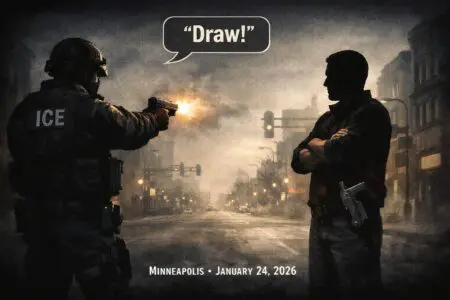
Trump publicly announced Thursday that he might deploy troops to Minnesota to quell protests over the federal government’s aggressive immigration enforcement operations in Minneapolis after a federal agent wounded a man and, a week earlier, an ICE officer fatally shot Renee Good.
Protesters have been confronting masked ICE officers, calling for accountability and demanding that the surging federal presence be ended. Trump’s social media post called the demonstrators “insurrectionists.” He said he would “put an end to the travesty” if state leaders didn’t act.
Let’s call his use of the word insurrection what it truly is: a weapon in his political arsenal — not a consistent description of the events in question.
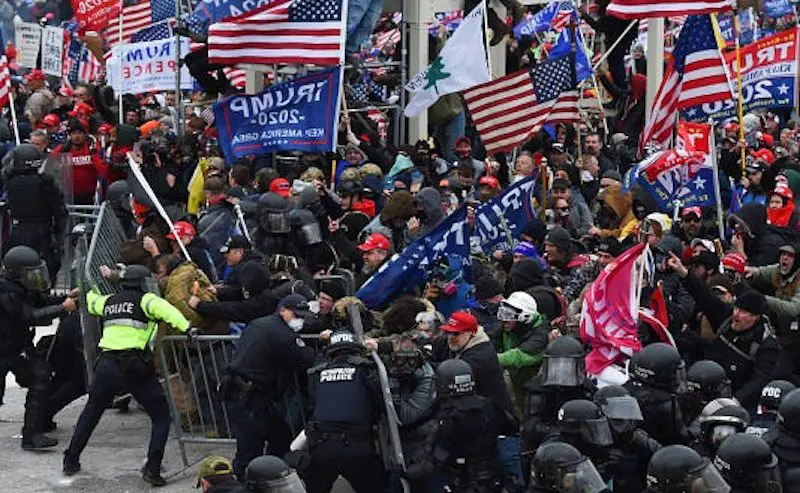
Five years ago, on January 6, 2021, a mob of thousands stormed the United States Capitol in a violent attempt to stop the peaceful transfer of power and disrupt the certification of the 2020 election. That attack resulted in death, scores of injured and broken law enforcement officers, and hundreds of federal charges. Trump’s own public remarks that day — urging supporters to march to the Capitol and “fight like hell” — were a central element in the sequence of events that led to the breach.
According to the final report from the House select committee investigating the matter, Trump did not immediately act to call in the military or otherwise stop the violence. For hours, he remained in the White House, watching coverage on television, and delaying any decisive intervention. When it was over, he called the criminals “patriots.”
More recently, upon winning the 2024 election and resuming the presidency, Trump took the extraordinary step of issuing blanket pardons and commutations to virtually all convicted participants in the January 6 Capitol attack, including those convicted of violent crimes and obstruction of Congress. About 1,500 individuals were pardoned or had sentences commuted on Trump’s first day in office, effectively wiping away consequences for actions that deserve to be labeled a domestic terror attack. Again, to Trump, these criminals were “patriots,” but Liz Cheney, the brave congresswoman who ignored party cronyism to get to the truth, was a “traitor.” And the former president torpedoed her re-election effort.
An insurrection is an act of open revolt against a constituted government. Citizens defending themselves from masked invaders who operate without due process do not qualify. If an actual attack on the Capitol that sought to overthrow a constitutional process — with violent breach, death, and assault on law enforcement — doesn’t count as an insurrection in the eyes of this president, how does a peaceful protest against government policy, even when tense and messy, instantly get labeled as one? The hypocrisy is palpable.
The protests in Minneapolis reflect frustration and fear over federal law enforcement tactics and the killing of a city resident by an ICE agent. People are taking to the streets to demand accountability and to oppose what they view as an occupation of their city by armed federal agents. There’s anger — and in some moments clashes — but this is a protest, not an organized attempt to overturn or seize control of the government. In other words, this is not January 6, 2021.
Trump’s decision to throw around the word insurrection in this context — shortly after trimming or eliminating consequences for 2021’s actual Capitol rioters — illustrates his stark double standard. It’s not just inconsistent — it undermines the meaning of our most serious laws. Insurrection Act deployment is meant for “civil disorder, insurrection, or rebellion.” Yet the President reserves that label for protests against his policies, not for the day an armed mob attempted to help him stage a coup by stopping a constitutional process.
When words like insurrection and troops in the streets are selectively applied, they lose meaning — and democracy loses its guardrails. Labeling political dissent as treasonous only deepens the political divide and inflames more resistance. It’s not just cynical rhetoric; it has real implications for civil liberties, for federal-state relations, and for how Americans come together — or tear apart — in times of crisis.
If January 6 wasn’t an insurrection worth prosecuting to its full extent, what is? And if protesting an immigration policy puts you in that category, then the label has become nothing more than a political cudgel. But, hey, that’s life in Trump’s America.

Mark M. Bello is an attorney and award-winning author of the Zachary Blake Legal Thriller Series, ripped-from-the-headlines, realistic fiction that speaks truth to power and champions the rights of citizens in our justice system. These novels are dedicated to the social justice movement. They educate, spark discussion, and inspire readers to action. One of these novels, Betrayal High, was written in response to school shootings. For more information, please visit www.markmbello.com.