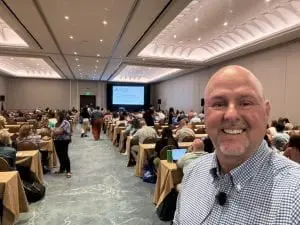

 This week, I had the privilege of spending two incredible days with a group of middle school principals in North Carolina—and let me tell you, these leaders showed up ready to do the real work. Not the surface-level, check-the-box work. The deep, connective, culture-building work that strengthens teams, sharpens purpose, and helps leaders breathe again.
They modeled vulnerability.
They pushed their thinking.
They leaned into hard conversations.
And they embraced tools that will transform the way they lead.
I left feeling inspired—and genuinely proud—not only of the work they did, but of the work we did together. I was honored to partner with my colleague and friend, Dr. Frederick Buskey, whose Wisdom, Clarity, and “simple framework discipline” always elevate the experience. Together, we walked alongside leaders who are navigating the weight of the first part of the school year with courage and determination.
And it was powerful.
Leadership—especially in schools—moves fast. You’re responding, reacting, solving, adjusting, supporting, and putting out fires all at once. Too often, leaders don’t get the time or space to slow down and work on their leadership, not just in it.
These principals chose differently.
Over our two days together, they:
We began with activities designed to strip away titles, roles, and the “leader armor” so many principals wear every day. These leaders leaned into the discomfort of vulnerability and allowed themselves to show up authentically with one another. They shared challenges, insights, and the realities of leading in the messy middle of the school year. What emerged wasn’t surface-level collegiality, but genuine connection—the trust-building kind that creates alignment, collaboration, and a willingness to lean on one another long after the session ends.
The group jumped into the Eisenhower Matrix with both curiosity and honesty, confronting the patterns that pull them into constant urgency. Together, we explored what truly belongs in the “important but not urgent” quadrant—the proactive space where culture grows, instruction strengthens, and intentional leadership happens. Leaders walked away with a renewed commitment to protect their time, reduce overwhelm, and orient their calendars around the work that truly moves the school forward.
This reflection tool gave leaders a structured way to analyze their leadership habits and organizational practices. They identified what is working, what is draining their teams, what should be amplified, and what should be reimagined. Their discussions were rich with insight—challenging assumptions, celebrating strengths, and considering new possibilities. This protocol allowed them to step back from the noise and gain clarity on what supports their mission and what needs to shift.
We didn’t just talk about tough conversations—we did them. Leaders identified the conversations they’ve been postponing and used a structured framework to plan their language, clarify their purpose, and move into the conversation with confidence and composure. They practiced scenarios involving accountability, performance issues, conflict between team members, and follow-up. By rehearsing these moments in a supportive environment, leaders built the skills needed to navigate difficult conversations without fear, frustration, or avoidance.
Real leadership happens in the hallway, in the classroom doorway, and during those quick moments between tasks. These principals learned to make those moments more intentional and more effective. We practiced short, structured conversations that reinforce expectations, develop trust, and keep staff aligned. When leaders can have brief, high-impact conversations consistently, the work moves forward faster and the culture shifts more naturally.
The beginning of the school year carries weight—emotionally, mentally, and physically. These leaders created space to name that heaviness. Some voiced exhaustion. Others shared the emotional toll of supporting staff and students. Many expressed gratitude simply for the chance to pause and reflect. Working through this together allowed the group to reconnect with their purpose and reclaim a sense of hope. This kind of collective reflection is essential—leaders spend so much time pouring into others, but rarely create space to refill their own tank.
When leadership teams intentionally step away from the daily grind to learn together, something powerful happens:
Clarity increases.
Trust grows.
Energy returns.
Purpose sharpens.
Culture shifts.
Your team becomes stronger—not by accident, but by design.
In two days, these principals demonstrated what happens when leaders choose to make time for Growth instead of waiting for time to magically appear. They proved that when you invest in your people, everything improves: communication, decisions, effectiveness, and even joy.
Whether you bring someone in to facilitate—like Dr. Buskey and me—or you set aside intentional time on your own, here’s my encouragement:
Create room for:
Honest reflection
Shared learning
Skill practice
Conversations you’ve been avoiding
Revisiting priorities
Real connection
You cannot build a strong culture on hope alone. You build it through deliberate, consistent, intentional work with the people who lead alongside you every day.
Your team deserves that time.
Your school deserves that time.
And you deserve that time.
 If your leadership team is ready to reset, refocus, reconnect, or rediscover your purpose, let’s talk. This is the work I Love—and the work that transforms schools.
Whether it’s a half-day retreat, a full-day workshop, or a multi-session Coaching series, we can help your team build clarity, connection, and capacity that will carry you far beyond the session.
You can connect with me anytime at darrinpeppard.com, or reach out if you want to co-create something meaningful for your school or district.
Because the work is heavy.
But you don’t have to carry it alone.
And when teams come together intentionally, the results are extraordinary.
Tune in this Sunday to the “Leaning into Leadership” podcast, where I’m joined by 2025 Iowa Elementary Principal of the Year Jayme Braida