

It has been more than seven years since I was a consultant. That doesn’t seem so long to me.
“You have no idea,” said a friend who is still consulting. “Things are much faster now. AI assisted search and data analysis. We fly a lot less; everyone does Zoom meetings for weekly updates. We also use Zoom for some client team training, except we’ve found that we’re doing it multiple times, because a twenty person group doesn’t work really well on Zoom. The prework for offsites used to be PowerPoint decks sent a week in advance, that nobody read, now we use survey software and some stuff that looks like gaming apps.”
I sensed Richard (not his real name) was working hard to make me feel out of touch. He succeeded.
“So, I’m curious, can you tell me, do clients still want to increase revenue or reduce cost?”
“Well, yeah, of course. That and people stuff. There’s a lot of resistance to the speed of change. I think I spend as much time or more doing one-on-ones than I used to.”
“Is that on Zoom?”
“Some, but not in the beginning. You still have to have a relationship. The Trust Formula still works.”

Richard and I worked together at Gemini Consulting, where the Trust Formula was used to build a trusting relationship with clients at all levels.
The formula was driven by the amount of personal risk the client faced, by agreeing to analysis, supporting a solution, or just working on a consultant’s client team. The greater the risk, the better you had to know the consultant (Intimacy, or familiarity with the person, and decision processes used), and the consultant’s track record (always shares information, and always does what she says she will). If the client felt that the consultant behaved exclusively in their own self-interest, that raised the level of risk and reduced credibility and reliability and so therefore reduced trust.
“Tell me, Richard, do you use Zoom for client pitches?”
“Oh, God No! You can support a relationship on Zoom, but you can’t build one with people you don’t know. Some clients, especially the ‘bake-off’ ones want to do that; we mostly turn that down because the hit rate is too low. ”
A “bake-off,” named for the Pillsbury Bake-Off, an American baking contest established in 1949, is an RFP sent to multiple consulting firms, allegedly to “level-the playing field,” making everyone play by the same rules. Usually, not always, a “bake-off” is performative; the firm with an “inside track,” or an established relationship, wins.
Richard and I talked for a while about what has and hasn’t changed in consulting.
“A lot of the old frameworks and methodologies are ubiquitous in-house now. Everybody does Growth-share, and Porter Five Forces, even that Blue Ocean stuff. Everyone has tried Lean or Six Sigma.”
“Have they mastered those?”
“Of course not, but you can’t bring up old methodologies because they say ‘We’ve done that. What else you got?’”
“That’s not really new.”
“No. And AI use is too often rudimentary at best, like when we used to see clients automate broken processes during Reengineering.”
When ex-Gemini people get together the conversation always comes back to the 1990s Reengineering craze. “Glory Days,” as Bruce Springsteen sung.
Richard is almost twenty years younger than me, but I sense he is feeling a little long-in-the-tooth as a consultant. He called to congratulate me on the publication of Change Leader? Who Me? His call was ostensively to ask if I’d be interested in a change management role on a bank project he was involved with. When I declined, he proceeded to tell me how much things had changed.
I get that I would be a little uncomfortable with running meetings on Zoom, and using Claude for data analysis or ChatGPT and Canva to create slides. Richard isn’t really doing that, though.
“I have to be familiar with AI software, but the analysts are doing that.”
He’s a partner level consultant and he’s starting to feel a pinch between his existing relationship clients, who are retiring, and the “Technology-solves everything” mindset of up-and-comers both at the client and his own organization.
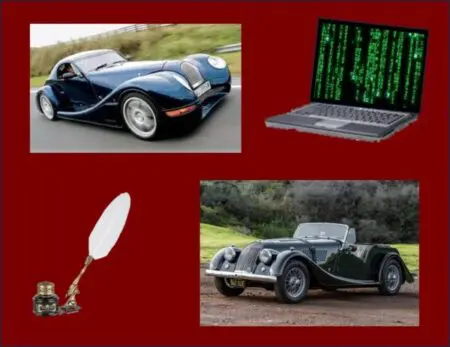
We talked about technology changes I saw over forty years in consulting. When I started in 1980, there were physical libraries of research and former projects presided over by Librarians. Reports were typed on IBM Selectric typewriters. Slides were hand-drawn on large panels or reproduced onto acetate “flimsies” for projection on overhead projectors. Analysis was done on main-frames or very often on Texas Instrument hand-held calculators.
Did I see speed increases from new technology? Absolutely. A mistake in a hand drawn panel might take a day to get the artist in and correct it. Later, I remember correcting slides as a presentation was going on and delivering them on a floppy. Now that can be done electronically instantaneously.
“Plus ça Change” is an abbreviation of the French phrase, “plus ça change, plus c’est la même chose,” the more things change, the more they are the same thing (or remain the same). This phrase was penned by the French writer Jean-Baptiste Alphonse Karr in 1849.
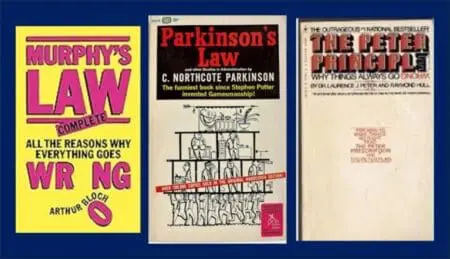
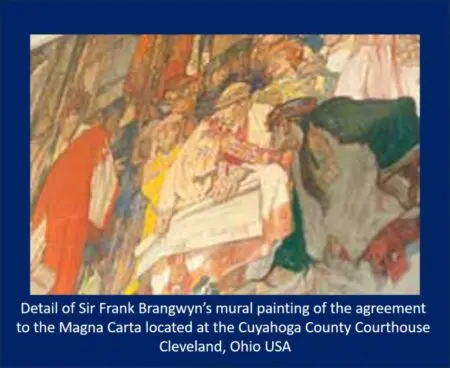
In consulting, it seems to me that, while technology is changing the speed of analysis and production of reports, some things are not changing:
Richard and I finished our conversation, and said he felt better for having called me. In the end he half-heartedly asked if I was sure that I “wouldn’t be interested in joining” his project.
I was flattered and I told him so.
“No thanks. This late-adopter is a comfortable retiree, who is happy not having to learn new tricks.”
(This essay was written by ChatGPT.)
No, it wasn’t!
And neither were these.


The post Consulting: Plus ça Change appeared first on Wisdom from Unusual Places.
Originally Published on https://wisdomfromunusualplaces.com/blog/