Thursday - June 4th, 2026
Apple News
×

What can we help you find?

Open Menu

Level 2 & Level 3 Credit Card Processing: How to Qualify for Lower Interchange Rates for your B2B Business!

AI Overview 

This article serves as a guide for B2B businesses on how to significantly lower their credit card processing fees by leveraging Level 2 and Level 3 data. It defines the three levels of transaction data, explaining that the more detailed the information provided (e.g., tax amounts, PO numbers, and line-item details), the lower the interchange rates. The article also highlights a recent and critical change: Visa’s Commercial Enhanced Data Program (CEDP) now requires accurate, dynamic data, making generic or “dummy” data non-compliant. To address this, the article promotes NPSONE and its smart invoicing platform, ClickBillR, which automatically captures and transmits the required Level 3 data, ensuring compliance and maximizing savings. It also recommends combining this strategy with ACH payments for even greater cost reduction, providing a real-world example of substantial annual savings.


Level 2 & Level 3 Credit Card Processing: How to Qualify for Lower Interchange Rates for your B2B Business!


Introduction

For many wholesalers, distributors, and B2B businesses, credit card fees can eat away at profits. What most business owners don’t know is that Visa and Mastercard offer reduced interchange rates if you pass additional data with your transactions.

This is called Level 2 and Level 3 processing. By providing enhanced transaction details—like tax amounts, PO numbers, and line-item data—businesses can qualify for lower fees.

But here’s the catch: Visa’s Commercial Enhanced Data Program (CEDP) recently introduced stricter requirements. Generic or “dummy” data no longer qualifies.

That’s why we built ClickBillR, a smart invoicing platform powered by NPSONE, to automatically capture and transmit the right data—ensuring compliance and helping businesses unlock lower interchange rates.


What Is Level 1, Level 2, and Level 3 Transactions?


Not all credit card transactions are created equal. The more detail you provide, the better your rates.

  • Level 1: Basic consumer transactions (Retail, restaurants, E-Commerce). Only requires standard details like card number, expiration, and amount.
  • Level 2: Adds extra fields such as sales tax, customer code, and merchant info. Helps B2B businesses qualify for reduced interchange.
  • Level 3: Requires detailed line-item data like product descriptions, quantities, unit prices, tax, and PO numbers. Designed for large B2B, government, and corporate card transactions.

The difference in savings can be significant. A $10,000 transaction could save $100+ in fees if it qualifies for Level 3 instead of Level 1.

sponsored by

Level 2 &Amp; Level 3 Credit Card Processing: How To Qualify For Lower Interchange Rates For Your B2B Business! &Raquo; B2B 300X89 1

Visa’s New CEDP Rules: What Changed


In 2024, Visa launched the Commercial Enhanced Data Program (CEDP) to tighten requirements around Level 2 and 3 data.

  • Old system: Merchants could use generic values (like “12345” for a PO number) and still qualify.
  • New system: Visa requires accurate, dynamic data for every transaction. Generic or repeated values may trigger non-compliance.
  • Impact: Businesses that don’t update their invoicing and payment tools risk losing access to reduced interchange rates.

This is where many businesses are getting caught—they assume their processor is still passing data correctly, when in reality they’re paying higher fees without realizing it.


How ClickBillR Keeps You Compliant


ClickBillR was designed with Visa’s new rules in mind. It dynamically generates Level 3 data for each invoice, so you never get flagged for compliance issues.

ClickBillR Transmits:

  • Line-item descriptions.
  • Quantity and unit price
  • Total tax amount
  • Invoice number and PO number.
  • Freight, duty, and other details

Because the data is unique and tied to the actual invoice, Visa can’t identify it as “dummy” info. Every transaction passes cleanly, qualifying for the best interchange rates.


Why Level 2 & 3 Processing Matters for B2B


If you’re in wholesale, manufacturing, distribution, or government contracting, your customers are often using corporate or purchasing cards. These transactions are eligible for Level 2/3 interchange savings, but only if you provide the right data.

  • Without Level 2/3:
    • Transaction: $10,000 corporate card
    • Interchange: ~2.65% ($265 fee)
  • With Level 3:
    • Transaction: $10,000 corporate card
    • Interchange: ~1.90% ($190 fee)
    • Savings: $75 on one transaction

Multiply that by over 100-1000 invoices monthly, and savings increase rapidly.


ACH: The Secret Weapon for Even Bigger Savings


Even with Level 3 data, card fees remain higher than ACH. That’s why ClickBillR also promotes ACH payments directly on invoices.

  • ACH costs pennies per transaction.
  • No interchange or card network fees
  • Customers can pay online just as easily as they would with a card.

Combining Level 3 credit card optimization with ACH adoption is the smartest way for B2B companies to cut payment costs.


Real-World Example


A Florida-based distributor processing $2 million annually in B2B invoices implemented ClickBillR with Level 3 data + ACH options.

  • Before:
    • All payments were made via corporate credit card.
    • Effective fee rate: 2.8%
    • Annual fees: $56,000
  • After:
    • 40% of invoices paid via ACH.
    • 60% of card transactions qualified for Level 3 rates.
    • Effective fee rate dropped to 1.7%.
    • Annual fees: $34,000

Result: $22,000 in yearly savings—without losing a single customer.


How NPSONE + ClickBillR Stand Out


Most gateways don’t automatically handle Level 3 compliance. Merchants either need custom development or manual uploads.

With NPSONE + ClickBillR, everything is built-in:

  • Automated Level 2 & 3 data population
  • Smart invoicing with ACH integration
  • Dual pricing support for zero-cost credit card acceptance
  • QuickBooks Online sync for seamless accounting
  • Real-time reporting to track interchange qualification

And unlike Stripe or Square, Nationwide Payment Systems provides live 24/7 support and a dedicated relationship manager for every account.


Book a free consultation to determine your best option!


Level 2 and Level 3 processing aren’t just “nice to have”—they’re essential for B2B businesses looking to stay competitive.

With Visa’s new rules, generic invoice data won’t cut it anymore. If you want to unlock lower interchange rates and stay compliant, you need a platform that handles it automatically.

That’s what ClickBillR + NPSONE deliver: smart invoicing, ACH payments, dual pricing, and built-in Level 3 compliance.

👉 Ready to save on every transaction? Book a Demo with Allen and see how we can cut your payment costs.


CLICK HERE TO FIND MORE ABOUT OUR PROGRAMS

FAQ: Frequently Asked Questions

What is Level 3 credit card processing?

Level 3 requires detailed transaction data like item descriptions, tax, and PO numbers. 

Why does Level 3 lower interchange fees?

Card brands reward accurate data with reduced rates for corporate/purchasing cards. 

What is Visa’s CEDP program?

A new compliance program requiring dynamic, accurate Level 2/3 data. 


Can I still qualify with generic PO numbers?

      No, generic or repeated values no longer qualify under CEDP. 


      Does ClickBillR support Level 3 automatically?

          Yes, it dynamically generates Level 3 data for every invoice. 


          The post Level 2 & Level 3 Credit Card Processing: How to Qualify for Lower Interchange Rates for your B2B Business! appeared first on Customized Payment Processsing Solutions.
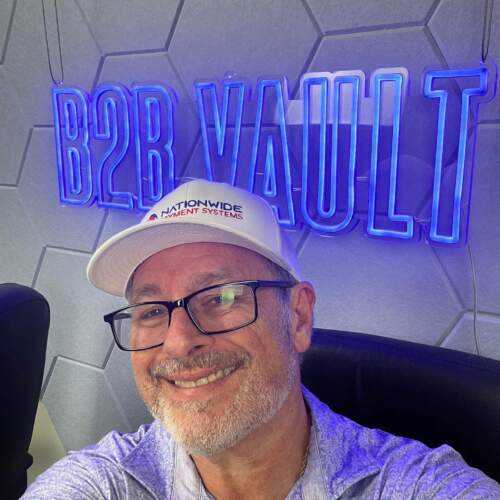

          ALLEN KOPELMAN CEO, Nationwide Payment Systems | Host of the B2B Vault: The Biz to Biz Podcast

          Allen Co-Founded Nationwide Payment Systems Inc. in 2001, with the plan to sell credit card processing services and equipment to merchants in the South Florida area and provide concierge style service for each client. Quickly the company grew to 1000 plus clients and we were had clients all over the United States.
          The entrepreneurial bug started early in Allen’s life as comes from a family of business owners and learn about business from early age behind the cash registers at his father’s clothing stores in Miami. Later going to Culinary School in Atlanta and being a Chef, then Executive Chef for Metro Hotels in Dallas, Texas running food and beverage operations in Hotels. In 1992 a move back to Florida and opening a restaurant, catering company and consulting group.
          After gaining a couple of years of experience selling merchant services, Allen Co-Founded Nationwide Payment Systems with David Burney. Together the company started and quickly grew, products were added, processing banks and the company became laser focused on technology that would help merchants. Along with that came a focus on hard to place businesses that many banks did not want to work with.

          Posted in:
          Allen Kopelman
          Tagged with:
          0 Comments
          Oldest
          Newest Most Voted