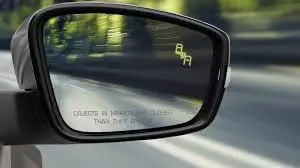
One of my favorite safety features that nearly all newer vehicles have is the blind spot warning. There might be a sound, a light on the side mirror, or some other method that alerts you, but the message and purpose is the same. To let you know there is a vehicle next to you that you might not be able to easily see in the mirror or with the naked eye.
There’s nothing easy about leadership. It requires Clarity, intention, and a constant willingness to grow. But perhaps one of the hardest truths for any leader to accept is this:
I had one pointed out early in my principalship. I’ll never forget the moment. My new superintendent pulled me aside and said, “I notice you say the words ‘I disagree’ quite frequently. It tends to put others on the defensive and may cause those with other ideas to withdraw and not speak up.”
It was a glass-shattering moment. One of those things I couldn’t unhear once it had been said. And honestly, it changed everything. I had no idea that simple phrase—used with good intentions—was shutting others down. That was a blind spot, and until someone I trusted had the courage to say it out loud, I had no chance of addressing it.
I don’t use those words anymore.
 That experience taught me how critical it is to have trusted voices around us. People who will help us grow by showing us what we can’t see on our own.
Whether it’s a leadership coach, a colleague, or a teammate—we all need someone who isn’t afraid to say, “Hey, here’s something I’m noticing.” That kind of relationship isn’t about critique; it’s about clarity.
Leaders don’t need more judgment. They need more mirrors.
 At a recent conference, I heard a powerful talk by Sarah Wirth that took this idea of self-awareness even further. She introduced a framework that put words to something I’ve felt for years—but never had the language for.
She explained that leaders tend to fall into one of four quadrants based on their level of empathy and accountability:
High Empathy & High Accountability – The Motivator
High Empathy & Low Accountability – The Buddy
Low Empathy & High Accountability – The Enforcer
Low Empathy & Low Accountability – The Ghost
This hit me hard.
Because here’s the thing—so many of us think we’re living in that motivator quadrant. We believe we’re showing up as someone who cares deeply and holds others to high expectations. But when we don’t have the clarity to recognize our blind spots, we might actually be drifting into buddy or enforcer territory.
And no one is calling it out.
 That’s where it all clicked for me. These four quadrants of leadership aren’t just helpful categories. They’re a mirror. They help us ask:
Am I avoiding hard conversations in the name of being “nice”?
Am I so focused on results that I’m forgetting the people doing the work?
Am I showing up at all? Or am I letting my team fend for themselves?
In other words: Where am I not seeing clearly? And who’s helping me notice?
 The motivator quadrant—high empathy and high accountability—is the sweet spot. It’s what we’re aiming for as leaders. It’s not soft. It’s not rigid. It’s the perfect mix of care and courage.
Motivator leadership is what helps teams thrive. I’ve seen it in action. I’ve lived it with the right team. In those moments, decision-making is clear, people feel seen, and goals are actually met—not just talked about. That doesn’t happen by accident. It happens by:
Regular reflection and feedback
Holding Relationships and results with equal weight
Having someone in your corner to help you stay balanced
Being brave enough to ask, “How am I showing up?”
 Leadership blind spots aren’t signs of failure. They’re invitations. Invitations to grow, to recalibrate, and to lead more fully.
So I’ll leave you with this:
Who is your mirror? Who are you trusting to help you stay in that motivator quadrant? And are you willing to hear what they have to say?
You don’t have to do leadership alone. But you do have to be willing to see yourself clearly.
That’s where the real Growth begins.
If you’re ready to gain clarity and lead with greater intention—start by discussing the four quadrants of leadership at your next leadership team meeting. As each other, what might be a blind spot I have that is hurting my leadership performance.
 And if your team could use a guide to walk alongside you in this work, I’d Love to help. Let’s talk about how we can bring this kind of transformation to your school or district.
Together, we can find those blind spots and build systems and processes to keep them from holding you back on your leadership journey.
 Send me a message or visit RoadToAwesome.net to start the conversation.
Tune in this Sunday to “Leaning into Leadership” when I sit down with Dr. Chris Culver for a powerful conversation about the science of kindness.
 Special alert: beginning this coming week, I will be hosting all three of the finalists for the National Middle School Principal of the Year and all three finalists for the National High School Principal of the Year on the podcast. Special episodes begin Tuesday, June 17th.